 English
 Pусский
 Español
 May 06,2026
Last month, a mid-sized packaging converter in Ohio found itself in an uncomfortable spot. For three years, its star product had been flat-packed garbage bags on pallets. Then, two of its biggest retail buyers switched to rolled, perforated bags designed for consumer dispensing. The converter’s existing flat-bag lines could not handle in-line perforation and tight winding. Overnight, 40% of its order book was at risk. The owner’s question was simple: “Do we really need a dedicated roll bag line, or can we get by with a retrofit?”
That question is being asked in more and more converting shops. The shift toward rolled garbage bags—driven by supermarkets, warehouse clubs, and janitorial supply channels—has turned what was once a niche add-on into a mainstream requirement. But jumping in too early, or with the wrong equipment, can drain capital. Too late, and you bleed customers. So when exactly does it make sense to move from a general-purpose bag maker to a system designed specifically for continuous roll production?
1. The Market Pull: When Your Customers Demand Rolls
The most obvious trigger is external: your existing customers or new prospects consistently asking for rolls instead of flat packs. But listening only to the loudest voice can be misleading. What counts is the pattern across months, not a one-off request.
According to sales data from several North American flexible packaging distributors, orders for rolled drawstring and star-seal garbage bags have grown at a compound annual rate of around 7–9% over the past five years. This isn’t just a pandemic-era spike; it reflects a lasting change in how end-users buy and store trash bags. Kitchen countertop dispensers, under-sink roll holders, and janitorial carts all favor compact rolls that let you tear off one bag at a time.
If your quarterly inquiries for roll packs exceed 20–25% of total garbage bag RFQs for two consecutive quarters, the market is telling you something. At that point, continuing to produce flat bags and manually converting them into rolls (a labor-intensive, inconsistent process) starts to erode both margin and quality perception. One packaging engineer we spoke to put it bluntly: “A hand-rolled bag looks hand-rolled. Retail buyers notice.”
2. The Operational Stress Test: Can Your Current Line Keep Up?
Before thinking about new machinery, many converters try to adapt their existing flat-bag equipment. They add an off-line rewinding stand or a separate perforation unit. In theory, this avoids a big capital outlay. In practice, it often creates a bottleneck that eats up any savings.
A standard flat garbage bag machine typically runs at high linear speeds—100 to 150 meters per minute is common. Adding a separate winding step immediately cuts the net output because the weakest link defines the line speed. Off-line perforating and rewinding stations often max out at 40–50 meters per minute for consistent perforation tear strength and roll tension. The result: your expensive high-speed bag maker spends most of its day waiting. When we model the total cost per roll, including direct labor and scrap from misaligned perforations, the DIY approach rarely beats a dedicated roll line once output exceeds about 150 tonnes per month.
Here’s where the decision becomes data-driven. Look at your last six months of production logs. What is your actual OEE (Overall Equipment Effectiveness) when running roll orders? If it’s below 60%, and the main losses come from changeovers between flat and roll products, the retrofit is already failing. A purpose-built system integrates perforation and winding into the same control architecture, allowing consistent tension from seal to core.
3. The ROI Calculation: Throughput, Waste, and Labor
Talk to any controller, and they’ll want the numbers translated into payback period. The math isn’t complicated, but it must include the hidden costs that flat-bag retrofits ignore.
Let’s take a realistic example. A converter running 250 tonnes of garbage bag output per month wants to shift 40% of that volume (100 tonnes) to roll packs. With a retrofitted line, usable output per shift might be around 400 kg/hour, with two operators needed to manage splices and adjust tension. Porosity-based scrap from inconsistent perforation can run at 4–6%. With a dedicated roll production system running at a conservative 800 kg/hour in-line, one operator can manage the line, and process scrap typically falls below 2%. The difference in direct cost per kilogram often exceeds 18–22%.
Over 12 months, that delta translates into a payback period of 18–24 months for the capital equipment—well within the threshold that most packaging company boards will approve. Importantly, this calculation ignores the revenue upside of being able to take on larger, more demanding retail contracts that simply won’t tolerate variable roll quality.
For converters seeking more granular benchmarks by film gauge and bag style, it helps to get tailored payback scenarios that match your actual product mix rather than relying on generic averages.
4. The Technical Threshold: When Complexity Demands Integration
Not all rolls are created equal. A simple coreless roll of HDPE star-seal bags with an open flap is one thing. But once customers demand drawstring rolls, perforated rolls with precise sheet counts per roll, or compact rolls for retail pegboard hooks, the technical requirements multiply.
Key areas where dedicated systems make a measurable difference:
-
Perforation placement and consistency: For counted rolls (e.g., 20 bags per roll), the perf must hold reliably during winding and shipping but tear cleanly at the point of use. This requires a perforation blade depth tolerance of ±10 microns and a tension control loop that adjusts in real time to film thickness variation.
-
Drawstring integration in roll form: Folding and inserting drawstrings on a machine also making rolls demands a synchronized cam-driven insertion station. Retrofitting drawstring capability later can cost more than the original bag maker.
-
Core and coreless winding spindle design: Retail roll diameters are often specified tightly (e.g., 110–120 mm for shelf systems). The winding spindle must maintain diameter within 1–2 mm across full speed without crushing the inner layers.
If your customers are starting to specify any two of these three requirements in their purchase orders, the technical case for an integrated roll line has already been made. Trying to build up capability through separate modules will test your maintenance team and lead to lot rejections that far outweigh the upfront savings.
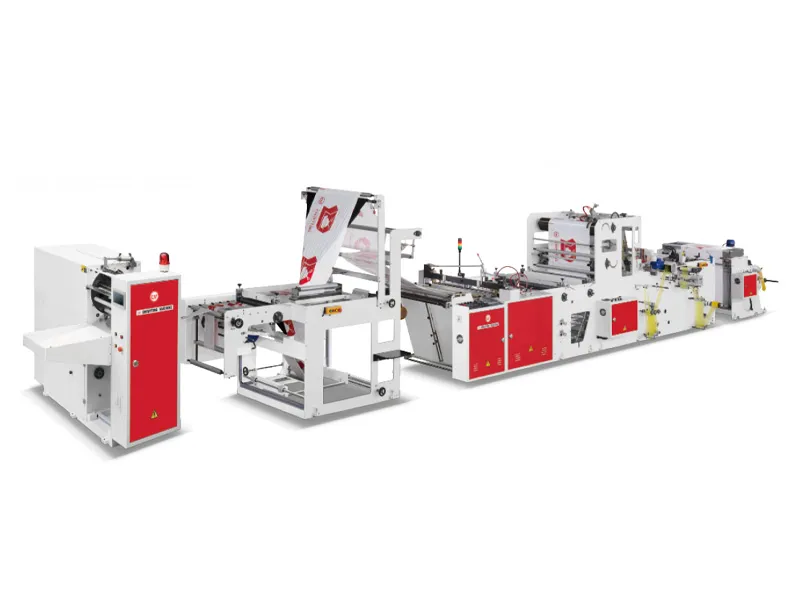
5. The Counterpoint: When Not to Invest in Roll Capacity
Honesty builds trust. There are situations where a dedicated roll bag line is the wrong move. If your roll business is purely seasonal and averages under 30 tonnes per month, custom toll winding from a specialist co-packer may be a better financial fit. Similarly, if your customer base accepts manually counted, heat-sealed rolls without in-line perforation, a semi-automatic rewinding table is an acceptable stopgap.
Also, check the infrastructure. A high-output in-line system typically needs a minimum ceiling height of 6 meters for bubble extraction and tower winding geometry, plus a compressed air system capable of delivering 8–10 bar with adequate drying. A shop built for simple flat bag machines may need a building modification that changes the entire investment case. In one documented case, a Georgia converter spent more on floor reinforcement and air supply upgrades than on the bag machine itself. That anomaly aside, for most standard industrial units operating in concrete-floored, 8-meter bays, the infrastructure is already in place.
6. Your Transition Playbook: Three Moves That Remove the Guesswork
If the market, operational, and technical indicators all point toward roll production, the final step is sequencing the investment so you don’t disrupt existing cash flow.
Move One: Run a trial order on a contract manufacturer’s line first. Commission 5–10 tonnes of your exact film with their equipment. Measure tear force, roll integrity after drop testing, and bag opening behavior. Take those data sheets back to your biggest prospect and secure a tentative volume commitment.
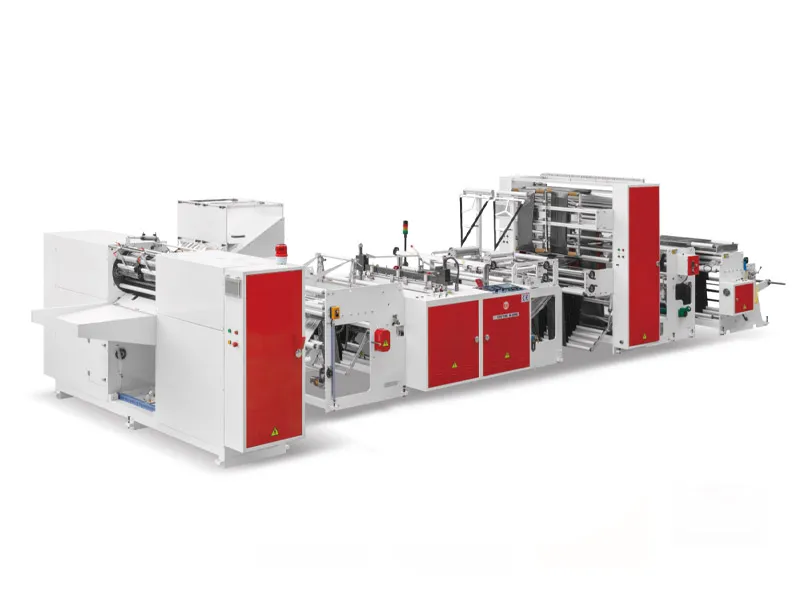
Move Two: Choose a platform that allows phased automation. Some roll bag production solutions are designed so you can start with a basic winding module and later add robotic palletizing, auto-core feeding, or vision inspection without replacing the main line. This preserves your initial capital while keeping the upgrade path open.
Move Three: Invest in operator training before installation. The most overlooked variable is the team. In-line roll systems, with their combination of thermal sealing, perf knives, and servo-driven winding, demand a different skill set than a simple rotary bag maker. Work with the equipment provider to have your lead operators spend three to five days on a similar running line, even before your machine ships. One large packaging group found that pre-installation training reduced start-up scrap by over 60% in the first month.
For converter owners who want predictable, repeatable roll quality without stitching together disconnected machines, the path forward involves more than just a purchase order. It requires matching the equipment architecture to the specific roll formats your market is adopting. If you’d like to explore how a purpose-integrated roll production line can be configured for your product range—from simple coreless rolls to perforated retail packs—you can discover how Chovyplas addresses those needs and start mapping your own transition timeline.
The production efficiency figures cited are drawn from aggregated industry benchmarks published by the Flexible Packaging Association and converter case studies. Individual results will vary based on film formulation, bag design, and operational practice.