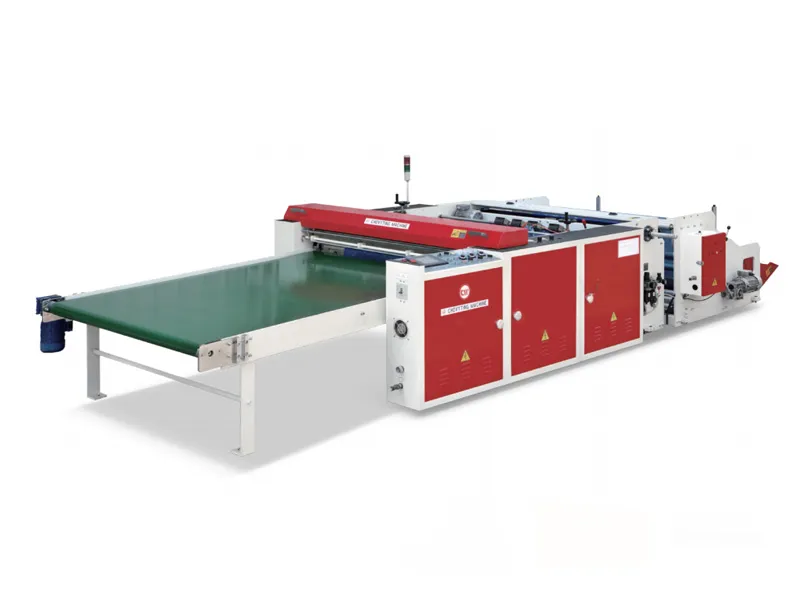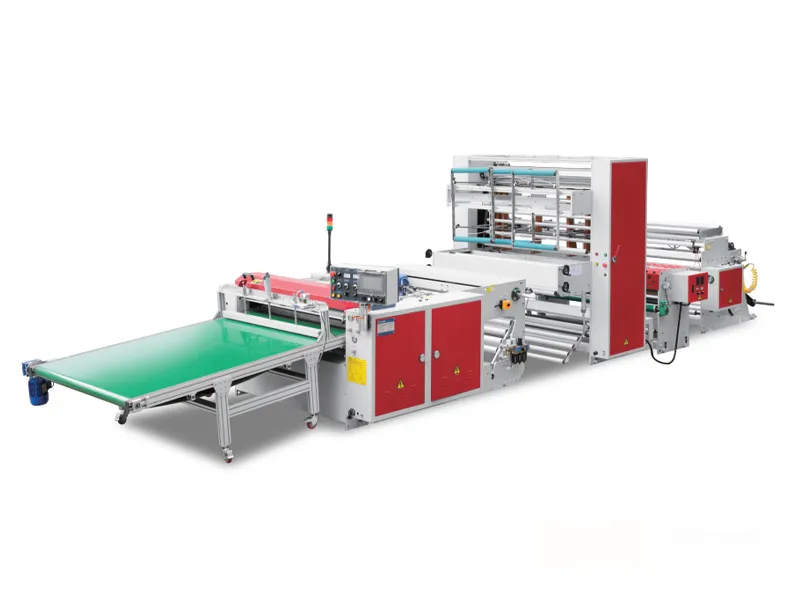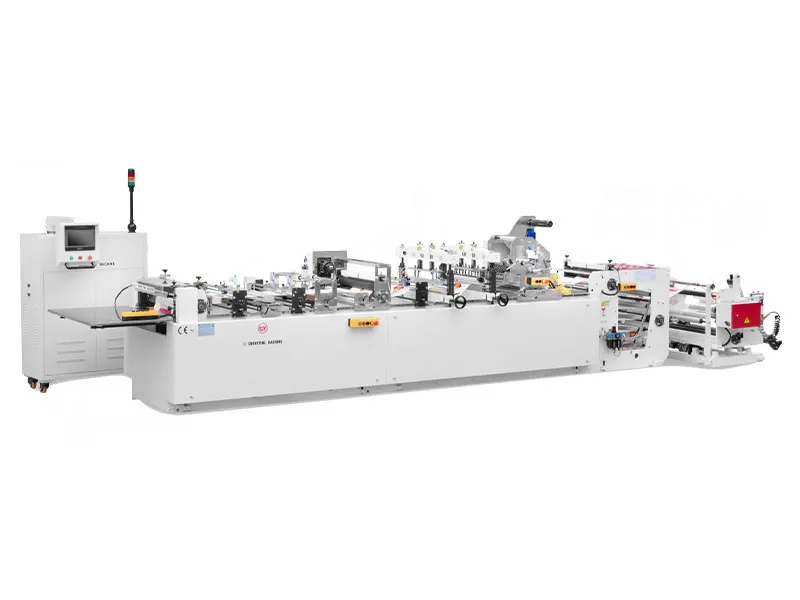
 English
 Pусский
 Español
 Jul 07,2026
Article Overview: This article provides a comprehensive introduction to the heavy duty bag making machine, covering its fundamental operation, typical uses in industrial packaging, and critical specifications for procurement teams. It builds foundational knowledge for early-stage research before purchasing decisions. For a complete view of heavy duty bag making machine solutions, see the heavy duty bag making machine video demonstration.
What Is a Heavy Duty Bag Making Machine?
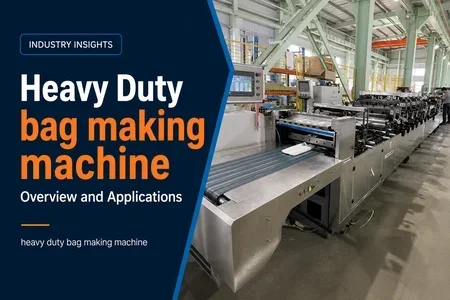
A heavy duty bag making machine is an industrial system engineered to produce large, robust plastic bags for packaging bulk materials such as cement, fertilizers, chemicals, sand, pet food, and agricultural pellets. It converts rolls of plastic film—typically polyethylene or polypropylene—into finished bags through automated steps: unwinding, sealing, cutting, and often gusseting or valve insertion.
Unlike standard bag makers, heavy duty models handle thicker films, larger bag dimensions, and higher throughput. They are essential in chemical plants, cement factories, agricultural processors, and dedicated bag manufacturing facilities. Common variants include bottom-sealing machines, valve bag makers, and FFS (Form-Fill-Seal) integrated tube machines.
Typical output ranges from 30 to 120 bags per minute, depending on complexity and configuration. Bag widths can exceed 1500 mm, with lengths up to 3000 mm. Many manufacturers offer modular designs for custom sealing patterns, gusset depths, and embossing.
How Does a Heavy Duty Bag Making Machine Work?
The core process follows a sequence of material handling and forming steps, detailed below.
Phase 1: Film Unwinding and Tension Control
The machine unwinds plastic film from a roll, maintaining consistent tension with servo-driven or pneumatic controllers. Proper tension prevents wrinkles or misalignment during sealing. Many systems include auto-splicing for continuous operation without roll changes.
Phase 2: Sealing and Gusseting
The film passes through heated sealing bars to create side or bottom seals, depending on bag type. For gusseted bags, side gusset devices fold the film edges inward simultaneously. Some machines use central sealing for flat-bottom bags. Servo-driven systems precisely control sealing temperature, pressure, and duration.
Phase 3: Cutting and Stacking
After sealing, a rotary or guillotine cutter separates individual bags. The cut bags are conveyed to a stacking or rewinding station. Heavy duty machines often include a counting and ejecting system to batch bags into predetermined quantities.
Advanced models may integrate embossing for print registration, valve patch application (common for cement powders), or perforation for easy opening. The entire sequence is coordinated by a PLC with a human-machine interface for parameter adjustments.
What Are the Key Applications for Heavy Duty Bag Making Machines?
These machines serve diverse industries requiring robust packaging for bulk goods. Machine configuration is heavily influenced by product characteristics and bag design.
- Cement and Construction Materials: Heavy duty valve bags and woven polypropylene bags are standard for cement, sand, and dry mortar. Specialized models are designed for this sector.
- Agricultural and Food Granules: Grain, feed, and fertilizer are often packed in large open-mouth bags from bottom-sealing machines. These bags must resist moisture and tearing during transport.
- Chemical Powders and Pellets: Chemical products require bags with high barrier properties and often valve closures to minimize dust exposure. Laminated films are common.
- Industrial Waste and Recycling: Large garbage bags for commercial waste collection rely on heavy duty bottom-sealing machines that can produce bags up to 3000 mm in length.
Each application may demand specific features such as reinforced seals, UV resistance, or anti-slip surfaces. For instance, cement bag machines often include a mesh maze exhaust vent to release air during filling. To see a real-world implementation of a complete heavy duty bag making machine system, review the heavy duty bag making machine approach for more details.
Which Specifications and Features Should You Consider?
When evaluating a heavy duty bag making machine, engineering and procurement teams should examine several technical parameters. The list below outlines critical specifications and their impact on production.
- Bag Dimensions: Maximum and minimum width, length, and gusset depth. Ensure the machine handles target bag sizes without excessive changeover time.
- Film Thickness Range: Typically 0.08 mm to 0.25 mm for heavy duty bags. Thicker films require higher sealing temperature and pressure.
- Production Speed: Usually measured in bags per minute (bpm). Speeds from 40 to 120 bpm are common; higher speeds require servo-driven motion control.
- Sealing System: Constant heat vs. impulse sealing. For heavy duty films, impulse sealing with cooling provides stronger bonds.
- Control System: PLC with touch screen; some offer remote diagnostics and recipe storage for different bag types.
- Optional Attachments: Gusset devices, embossing units, punching stations (for vent holes), and automatic rewinding are available as modular upgrades.
To structure a procurement assessment, follow an evaluation flow:
Step 1: Define Production Requirements
List the types of bags (flat, gusseted, valve, etc.), required output per shift, and acceptable changeover time. This defines the machine class needed.
Step 2: Review Machine Capabilities
Compare specifications against your list. Verify that sealing technology matches your film type and that mechanical warranties cover the expected duty cycle.
For a deeper dive into specific machine configurations, explore the FFS heavy duty bag making machine product line to see how different setups meet various production demands.
FAQ
What should buyers evaluate first about heavy duty bag making machine?
Start with fit, evidence-backed requirements, and supplier proof relevant to heavy duty bag making machine before shortlisting vendors.
How can teams reduce procurement risk for heavy duty bag making machine?
Use structured comparison, validate specifications early, and review implementation or quality checkpoints with documented evidence.
Related articles
- Heavy Duty Bag Making Machine: A Complete Guide
- Automatic Bagging Machine Manufacturers: Buyer's Guide
- Heavy Duty Bag Making Machine Overview and Buying Guide
Conclusion
Heavy duty bag making machines are vital for industries needing robust, large-format packaging. Understanding the basic technology—film unwinding, sealing, gusseting, and cutting—helps technical buyers evaluate different configurations against their production needs. Key specifications such as bag dimensions, film thickness range, and sealing method directly influence machine selection. By systematically assessing operational requirements and consulting technical documentation, procurement teams can choose a machine that delivers reliable performance and low total cost of ownership. For continued research, review product details and machine demonstrations from established manufacturers to align your choice with real-world capabilities.