 English
 Pусский
 Español
 Apr 28,2026
If you're running a T-shirt bag production line, you already know the brutal math: every minute your machine idles, every reject bag stacking up on the floor, every operator running back and forth to fix misfeeds—it's all money dripping through your fingers. And the worst part? Most manufacturers don't even realize how much they're losing until they finally upgrade.
I've seen it more times than I can count. A mid-sized packaging plant running semi-automatic equipment that maxes out at 80 to 100 bags per minute, struggling to meet peak season demand. Their defect rate hovers around 5% to 7%—meaning nearly one out of every fifteen bags winds up in the scrap bin. Material waste eats 8% to 10% of their raw film budget, and three operators per machine just to keep things limping along.
Here's what the data tells us. The global plastic bag making machine market was valued at 1.2 billionin 2024 and is projected to reach 2.3 billion by 2033, growing at a CAGR of 7.1%. The automated segment alone is expected to jump from 1.27 billionin 2025 to 1.36 billion in 2026—a 7.1% surge driven by rising labor costs and demand for consistent packaging quality. Translation? Your competitors aren't waiting around.
The Three Silent Killers of Your Production Floor
Let me walk you through the real-world breakdown of what's actually sabotaging your output—not the glossy brochure talk, but the gritty details I've seen across dozens of factories.
1. The Seal That Won't Hold
Inconsistent heat sealing is the most common headache. Wrong temperature settings, worn sealing bars, uneven pressure—suddenly you're getting bags that leak, tear at the seam, or outright fail quality inspection. One client of mine was rejecting nearly 6% of their daily run. That's six pallets, every single shift, straight to the recycle grinder.
2. The Phantom Size Drift
Bag lengths start varying. Your photoelectric tracking goes haywire. Film tension fluctuates. The servo motor tension isn't dialed in. Traction rollers slip. Before you know it, you've got a batch of 50,000 grocery bags where every tenth one is visibly shorter than its neighbor. Retailers don't accept that. Neither should you.
3. Downtime Death Spiral
Mechanical failures triggering cascading delays. A dull cutter blade. A blocked transport system. A sensor giving false readings. Each stoppage might only last 15 minutes, but multiply that across three shifts, five days a week, and you've lost an entire production day every month. One European packaging manufacturer reported an 8% downtime rate before upgrading—nearly 20 hours of lost production weekly.
What Real Output Gains Look Like (Not Just Marketing Math)
Let me share a case that actually happened. A Southeast Asian packaging supplier named GlobalFlex was stuck with outdated semi-automatic gear pushing barely 90 bags per minute. Their defect rate hit 6.2%. Material waste? A staggering 8% of every roll.
After switching to modern high-speed bag making equipment, here's what changed:
| Metric | Before | After | Improvement |
|---|---|---|---|
| Output per line | 90/min | 380/min | +322% |
| Defect rate | 6.2% | 0.9% | -85% |
| Material utilization | 91% | 98.5% | -7.5% waste |
| Labor per machine | 3 operators | 1 operator | -66% |
| Energy per 1k bags | 11.2 kWh | 8.6 kWh | -23% |
The result? They went from 43,200 bags per day to over 182,400, secured new contracts with two major supermarket chains, and achieved full ROI in just 14 months.
Another German manufacturer facing similar pain—240 bags/min peak, energy bills climbing, constant mechanical breakdowns—installed a dual-line automated pouch forming system hitting 400 bags per minute. Their energy consumption dropped 30%. Downtime plummeted from 8% to 1%.
These aren't outliers. They're what happens when you stop patching old machinery and start running equipment designed for continuous high-volume production.
The Hidden Costs of "Good Enough" Equipment
Here's what most buyers miss. When you're comparing machines, everyone talks about production speed—but nobody mentions setup time efficiency. A standard 500mm-wide bottom-seal unit running standard PE film might claim 150 cuts per minute. But does that include changeover time between bag sizes? What about warm-up losses?
I've watched factories spend 45 to 60 minutes every time they switch between 8-inch bags and 12-inch bags. That's nearly an hour of zero output, repeated multiple times daily. A properly spec'd system with quick-change die modules and preset recipe storage can cut that to under 10 minutes.
Energy efficiency is another blind spot. China's new GB/T 32456-2025 standard for energy-saving heating systems in rubber and plastic machinery reflects what leading manufacturers already know: heat sealing accounts for a huge chunk of operating costs. If your current unit isn't using precision temperature control and insulated heating elements, you're literally burning money every shift.
And then there's material compatibility. Not all bag-making lines handle the full spectrum of film types equally. Are you running HDPE, LDPE, LLDPE? Maybe biodegradable films? The latest generation of flexible converting machinery offers programmable tension settings for different material stiffness and thickness ranges—something older units simply can't do.
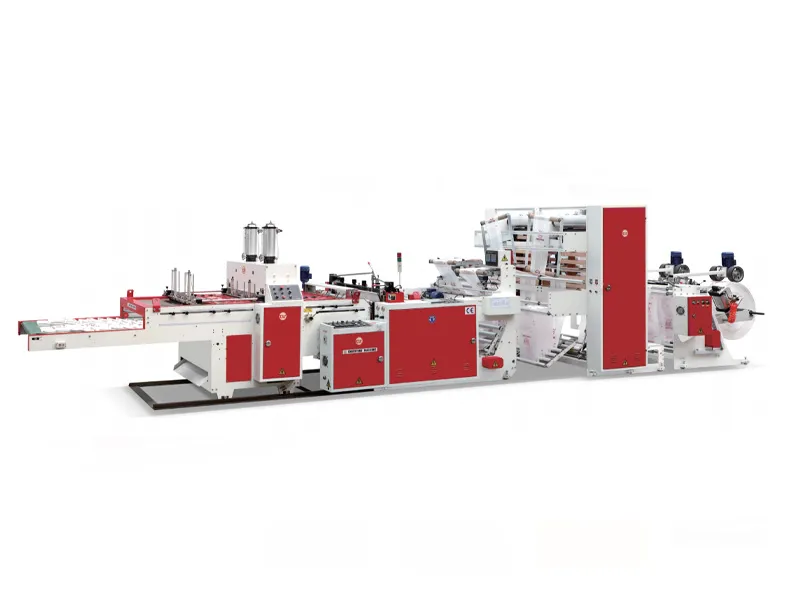
Where the Underestimated Bottleneck Actually Lives
Want my honest take after years in this space? The bottleneck isn't usually the cutting speed. It's downstream handling—how bags are stacked, counted, and prepared for packaging.
A machine running 300 cuts per minute is useless if the stacking mechanism jams every thousand bags or if manual counting introduces errors. The best retail bag converting systems include integrated batch counters and automated stackers that can eject finished bundles directly onto pallets. One client told me their auto-counting system eliminated shipping errors entirely—because no human was touching the count.
Think about your own floor right now. Where do operators spend the most time? Is it watching the machine run? Or is it untangling misaligned stacks, counting piles by hand, and re-bagging rejects?
A Smarter Approach That Actually Addresses Your Constraints
If you're serious about doubling or tripling your T-shirt bag production line output, you need equipment designed around your actual production constraints—not just a spec sheet.
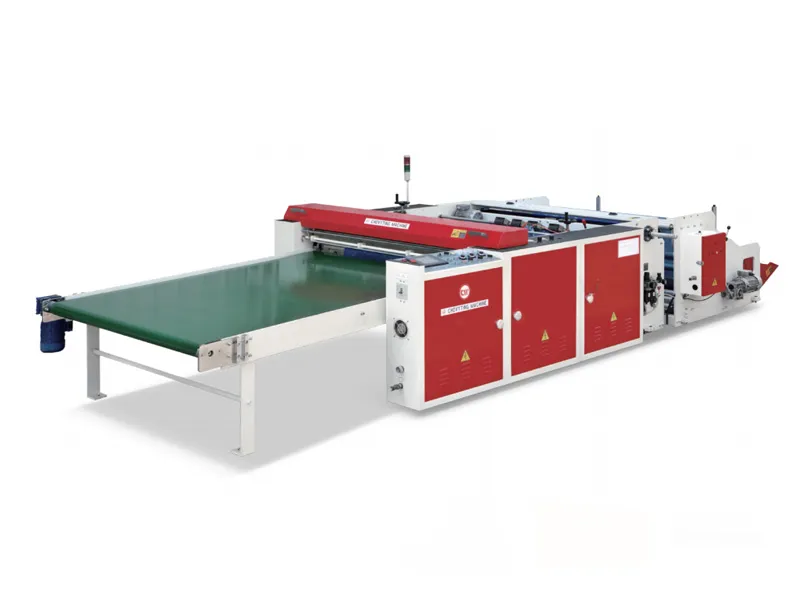
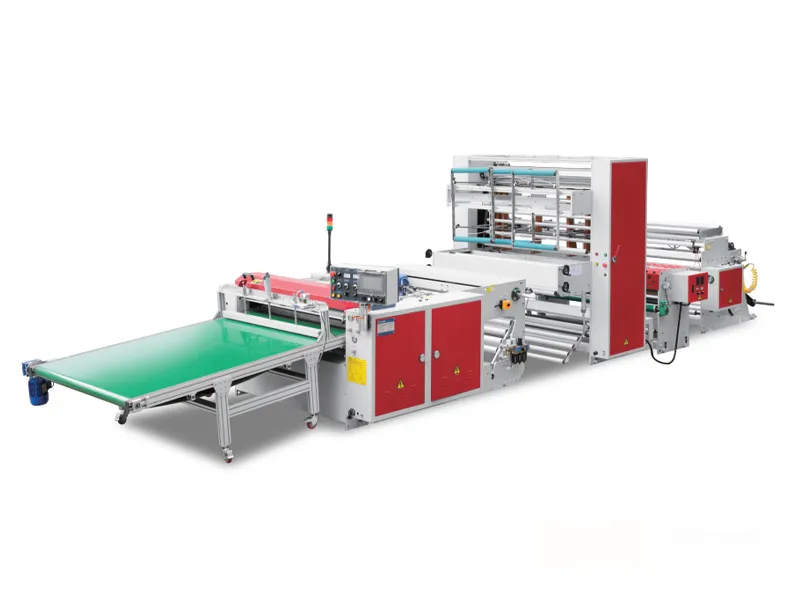
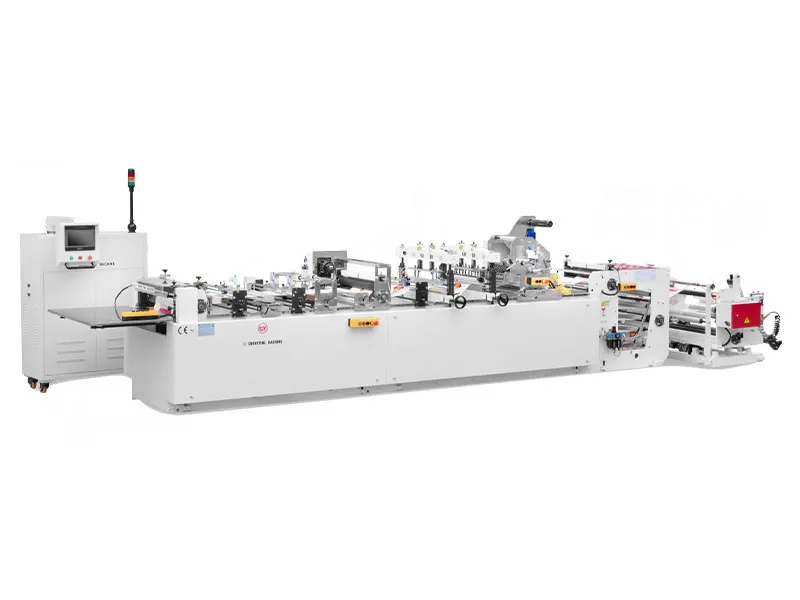
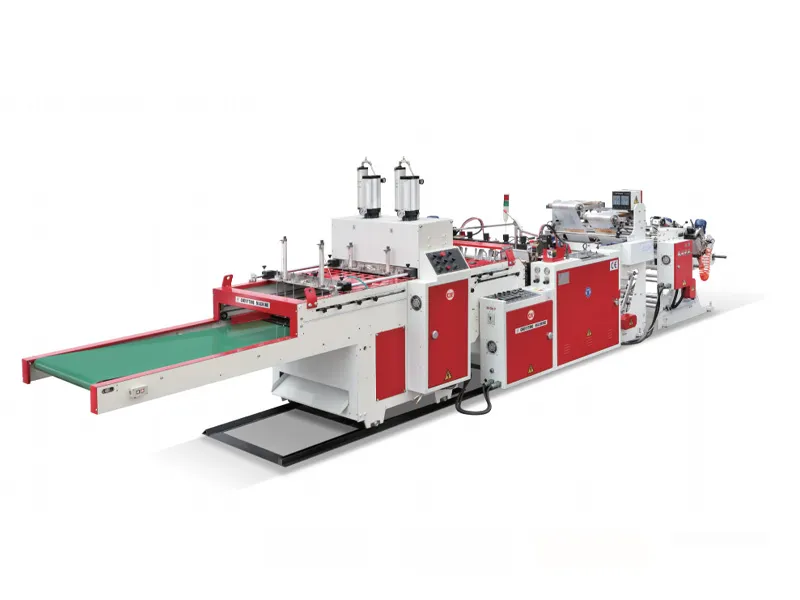
The platform I recommend most often to colleagues facing these exact headaches is modular, fully automatic bag-forming systems with servo-driven precision. These systems handle the full range of film materials (HDPE, LDPE, LLDPE, and even biodegradable films), deliver consistent heat seal strength through PID temperature control, and include real-time waste monitoring that catches defects before they cascade.
[check out the detailed specifications here — this is the exact configuration I walk clients through when evaluating their setup]{.anchor-wrapper}
Unlike traditional plastic shopping bag manufacturing lines that require manual intervention for every size change, modern units store recipe presets for multiple bag formats. Switch from supermarket carry bags to small produce bags in under five minutes, without sacrificing cutting accuracy.
Where most equipment falls short is in after-sales support. I've seen too many factories buy based on price alone, then wait weeks for replacement sealing bars or cutter blades when something wears out. The reliable suppliers maintain local inventory for consumables—because even the most advanced machine is worthless with a two-week downtime for a $50 part.
One of the most overlooked features? IoT-ready production monitoring. Being able to track uptime, waste percentage, and output rates from your phone means catching a tension issue before it ruins an entire shift's production. The German manufacturer I mentioned earlier credited their 99% uptime after six months directly to predictive alerts that flagged bearing wear before failure.
Making the Call: When to Upgrade vs. Patch
Let me be direct. If your current bag-making equipment runs reliably at 80% of claimed speed, defect rate stays under 2%, and changeovers take less than 15 minutes—you probably don't need to upgrade.
But if you're seeing any of these signs, the math changes fast:
-
Heat seal failures exceeding 3% (test every 500 bags for 24 hours)
-
Output per shift dropping more than 15% below rated speed due to misfeeds or jams
-
Labor cost per thousand bags higher than $8 in your region
-
Material scrap exceeding 5% of total film purchased
-
Downtime eating more than 5% of scheduled production hours
I watched a factory hold onto "perfectly fine" semi-automatic machines for three extra years while their competitors automated. When they finally ran the numbers, they'd lost over $240,000 in material waste and overtime labor—more than double the cost of the new equipment they eventually bought.
Final Thoughts: Your Direct Line to Getting This Right
Upgrading your plastic bag manufacturing line isn't just about speed—it's about sealing consistency, waste reduction, and labor efficiency compounding daily. The market is growing at over 7% annually. Your competitors are investing. The question is whether you'll be the one setting the pace or playing catch-up.
[get a personalized assessment based on your current specs — I've seen ROIs as fast as 6 months for the right fit]{.anchor-wrapper}
What I've learned from decades around this industry is that the best equipment isn't the one with the fanciest touchscreen. It's the one that stays running, handles your actual materials without constant tweaking, and has a support team that answers the phone when something goes sideways at 2 AM.
Chovyplas brings nearly 30 years of experience in bag-making and packaging equipment solutions, with a 10,000-square-meter manufacturing facility and over 180 employees dedicated to producing machines that deliver real production reliability rather than just optimistic brochures. When you're ready to stop losing money to slow lines, inconsistent seals, and preventable downtime, that's the kind of partner you want on your side.