 English
 Pусский
 Español
 Jul 13,2026
Article Overview: This article provides a technical overview of heavy duty bag making machines, covering their function, key specifications, production process, and important considerations for industrial buyers. It aims to build foundational understanding for procurement and engineering teams evaluating these systems for FFS (Form-Fill-Seal) and other heavy-duty packaging applications.
What Is a Heavy Duty Bag Making Machine?
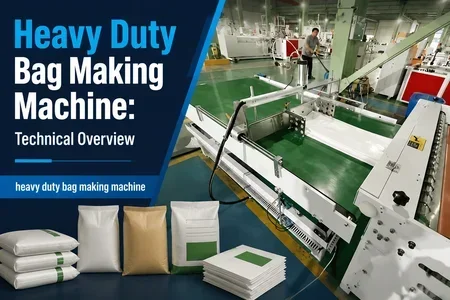
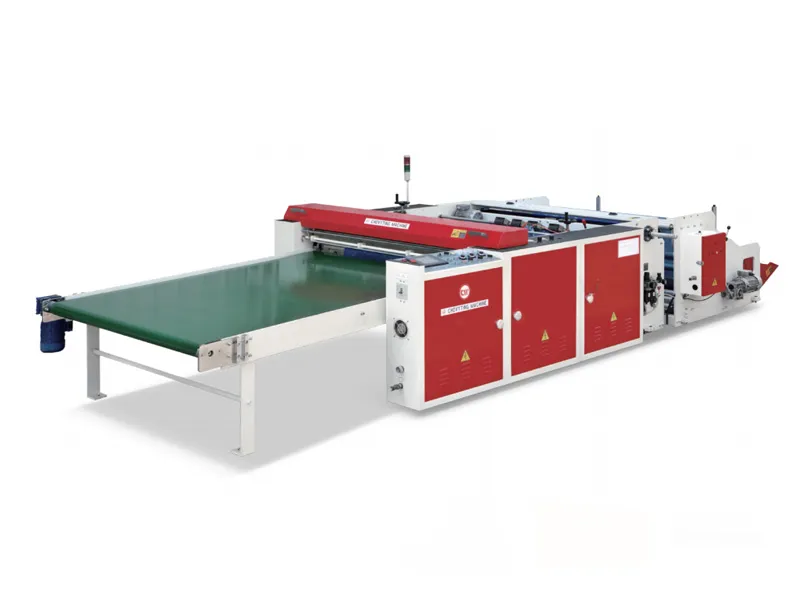
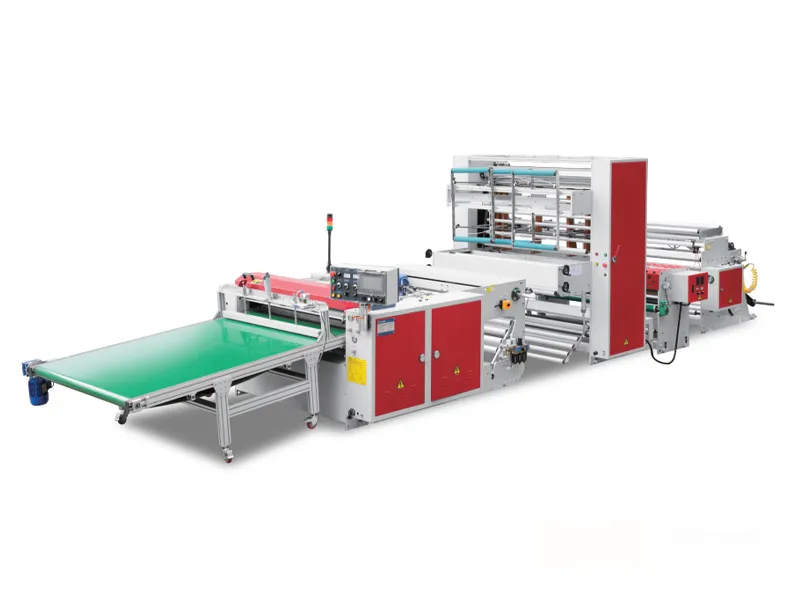
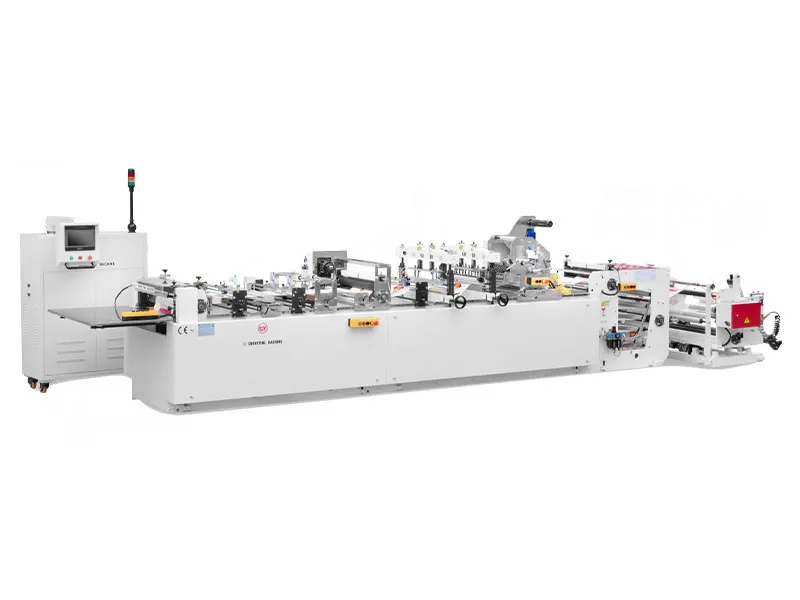
A heavy duty bag making machine is specialized industrial equipment designed to produce large, robust bags from plastic films—typically polyethylene (PE) or polypropylene (PP). These machines transform tubular or flat film into bags with dimensions up to 1500 mm in width and 3000 mm in length, and film thicknesses ranging from 0.05 mm to 0.20 mm or more. The output is used across industries such as chemicals, cement, agriculture, food processing, and building materials.
Common bag types produced include:
- Valve bags for powders and granules
- Open-mouth bottom-seal bags
- Gusseted bags with side folds
- FFS (Form-Fill-Seal) film rolls for inline packaging
These machines incorporate features like servo-driven film feeding, automatic tension control, hot-wire or hot-air sealing, and optional embossing or gusseting stations. The core operational principle involves unwinding film, forming it into a tube or flat shape, sealing the bottom, cutting, and stacking or rewinding the finished bags.
Key Technical Specifications to Evaluate
When assessing a heavy duty bag making machine, engineering managers and technical buyers should prioritize the following specifications:
- Bag Size Range: Maximum width and length; typical maximums are 1500 mm width and 3000 mm length.
- Film Thickness: The range of film gauges the machine can handle (e.g., 0.05–0.20 mm).
- Production Speed: Measured in bags per minute or meters per minute; common speeds range from 30 to 80 bags per minute for heavy-duty bags.
- Sealing System: Hot-wire, hot-air, or impulse sealing; must match film type and bag strength requirements.
- Drive System: Servo-driven vs. mechanical-driven.
Drive System Comparison
Servo-Driven: High precision, excellent speed control, energy-efficient, lower maintenance, ideal for complex bag designs and frequent size changes.
Mechanical-Driven: Lower initial capital cost, robust for simple bag patterns, easier to service in regions with limited technical support.
Buyer note: Choose based on required bag complexity, production speed flexibility, and total cost of ownership over the machine’s lifecycle.
How Does the Production Process Work for a Heavy Duty Bag Making Machine?
The manufacturing process on a heavy duty bag making machine follows a series of synchronized steps. Below is a typical workflow:
Step 1: Film Unwinding and Tension Control
The machine unwinds film from a large master roll while maintaining constant tension via a dancer arm or load cell feedback loop. This ensures uniform feed and prevents wrinkling or stretching.
Step 2: Film Folding and Gusseting (Optional)
For gusseted bags, the film passes through forming plows or a side-gusset station that creates inward folds at the edges. The depth of the gusset (typically 25–100 mm) is set via servo-controlled adjustments.
Step 3: Bottom Sealing and Cutting
A heated sealing bar or hot-air system creates a strong seal across the bottom of the bag. Immediately after sealing, a rotary knife or traveling cut-off blade separates the bag from the continuous film. The seal quality is critical for load integrity; parameters like temperature, pressure, and dwell time are precisely controlled.
Step 4: Stacking or Rewinding
Finished bags are either fan-folded and stacked on a conveyor or rewound into rolls for downstream FFS machines. Servo-driven gantries precisely place each bag to ensure neat stacks. For FFS film, the flattened tube is wound onto cores with consistent tension.
For a visual demonstration of these steps in action, we recommend viewing our heavy duty bag making machine video demonstration.
Why Choose a Dedicated Heavy Duty Bag Making Machine Over General Equipment?
General-purpose bag makers lack the robustness and specialized features required for large, thick-walled bags. Key benefits of a dedicated heavy duty bag making machine include:
- Higher Structural Rigidity: Heavy-duty frames and drives handle thicker films and larger rolls without vibration or misalignment.
- Advanced Sealing Capabilities: More powerful sealing systems ensure consistent welds on heavy-gauge films.
- Integrated Features: Options like embossing, patch application (e.g., valve patches), and inline slitting.
- Longer Product Life: Components are designed for continuous high-volume production.
- Better Bag Quality: Tighter tolerances on seal position, gusset depth, and cut length.
Investing in a dedicated machine reduces downtime and scrap rates when producing industrial packaging for demanding environments.
What Should Buyers Consider When Selecting a Machine?
Selecting the right heavy duty bag making machine involves a structured evaluation. Use the following procurement workflow:
Step 1: Define Bag Requirements
Document the exact bag dimensions (width, length, gusset depth), film material and thickness, required seal strength, and production volume per shift.
Step 2: Match Machine Capabilities
Compare candidate machines against your specifications: check the bag size envelope, film thickness range, speed, and available options like embossing or servo control.
Step 3: Request Performance Evidence
Ask for demonstrated production speeds on similar bag types, sample bags for quality inspection, and references from other buyers in your industry. Watching a live or recorded heavy duty bag making machine in operation can reveal real-world throughput and reliability.
Step 4: Evaluate Total Cost of Ownership
Consider not just the purchase price but also maintenance intervals, spare parts availability, energy consumption, and ease of operation. A slightly higher initial investment can yield lower per-bag costs over the machine’s lifetime.
For a broader view of available configurations, explore the full range of heavy duty bag making machines from leading manufacturers.
FAQ
What bag sizes can a heavy duty bag making machine produce?
Typical machines accommodate widths from 300 mm up to 1500 mm and lengths from 400 mm up to 3000 mm. Custom machines may exceed these ranges for specialized applications.
What materials are commonly used in heavy duty bag production?
The most common films are low-density polyethylene (LDPE), linear low-density polyethylene (LLDPE), high-density polyethylene (HDPE), and polypropylene (PP). Co-extruded films with barrier layers are also used for sensitive products.
How fast can a heavy duty bag making machine operate?
Production speeds vary by bag size and complexity. Typical outputs range from 30 to 80 bags per minute. High-speed servo-driven models can reach 100 bags per minute for simpler bottom-seal bags.
What maintenance does a heavy duty bag making machine require?
Routine tasks include cleaning sealing surfaces, lubricating bearings and chains, checking heating elements, and calibrating tension controls. Many machines feature self-diagnostics to reduce downtime.
Conclusion
Selecting a heavy duty bag making machine is a strategic decision that impacts production efficiency, bag quality, and operational costs. By understanding the machine’s core functions, technical specifications, and production process, engineering and procurement teams can make informed choices aligned with their specific packaging needs. Reviewing machine demonstrations and consulting with experienced suppliers ensures a solution that delivers long-term value.