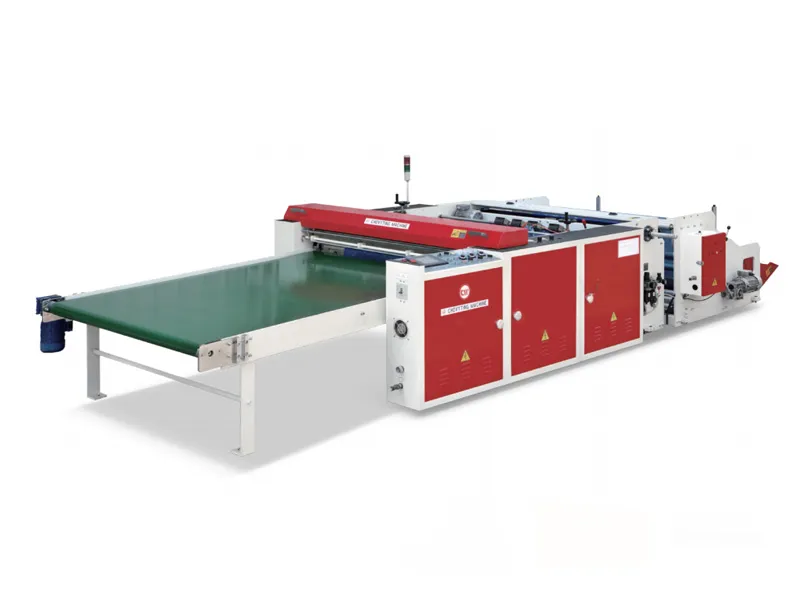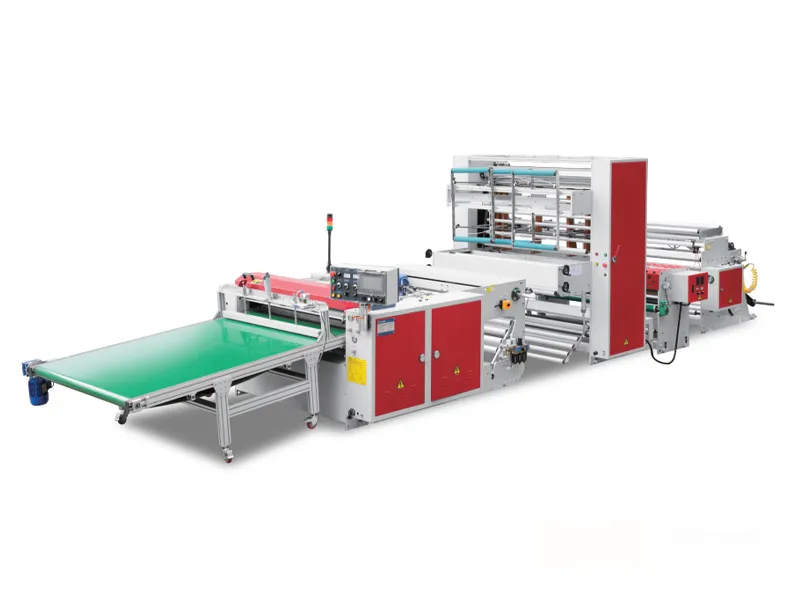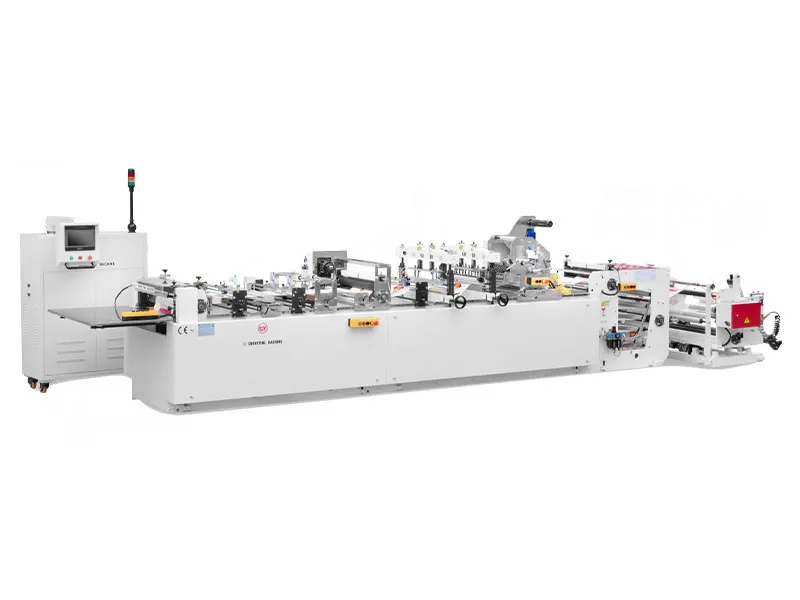
 English
 Pусский
 Español
 Jul 16,2026
Article Overview: This article provides a comprehensive introduction to heavy duty bag making machines, explaining their purpose, working principles, key components, common materials and applications, and important criteria for selecting the right equipment. Whether you are new to industrial bag production or evaluating upgrades, this guide offers foundational knowledge to support informed decisions. For a visual demonstration, see a heavy duty bag making machine video demonstration that shows the equipment in operation.
What Is a Heavy Duty Bag Making Machine?
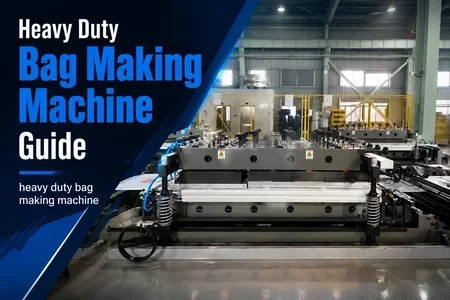
A heavy duty bag making machine is a specialized industrial system designed to produce large, robust bags from flexible films such as polyethylene (PE), polypropylene (PP), or laminated materials. These bags are primarily used for packaging bulk goods like cement, fertilizer, chemicals, resin pellets, animal feed, and construction materials. Unlike standard bag making machines, heavy duty versions handle thicker films—typically 80 to 200 microns or more—and produce larger bag sizes (widths up to 1500 mm and lengths exceeding 2000 mm). They operate at high speeds to meet industrial production demands.
These machines are essential for industries that require reliable, high-strength packaging capable of withstanding rough handling and environmental conditions. By automating bag production, manufacturers can achieve consistent quality, reduce labor costs, and minimize material waste. Heavy duty bag making machines are available in various configurations—from basic models with manual adjustments to fully automated lines with servo-driven controls and touchscreen interfaces.
The machine typically starts with a roll of tubular or flat film, which is unwound, formed, sealed, cut, and stacked into finished bags. Many heavy duty bag making machines can be integrated into form-fill-seal (FFS) lines, but standalone units for pre-made bag production are also common. Understanding this equipment is essential for operations managers aiming to optimize packaging efficiency and reduce material waste.
How Does a Heavy Duty Bag Making Machine Work?
The production process on a heavy duty bag making machine follows a sequential workflow. Below is a step-by-step breakdown of the typical bag-making cycle, from film roll to finished stack.
Step 1: Film Unwinding
The machine pulls film from a roll under controlled tension. An automatic tension controller adjusts brake pressure to compensate for changes in roll diameter, ensuring a stable and consistent feed.
Step 2: Gusseting and Forming
If side gussets are required, a gusset plate folds the film edges inward. For header bags or valve bags, additional forming tools shape the film accordingly.
Step 3: Sealing
Heated sealing bars press the film layers together for a precise dwell time. Temperature, pressure, and timing are set based on the film material and thickness to create strong, uniform seals.
Step 4: Cooling and Cut-Off
Cooling bars or air jets solidify the seal, then a rotary or guillotine cutter separates each bag. The cut length is controlled by an encoder feedback system to ensure accuracy.
Step 5: Stacking
Finished bags are conveyed to a stacking table where they are counted and collected for delivery to the packaging line or palletizing area.
The entire sequence is orchestrated by a programmable logic controller (PLC) that synchronizes the movements of servo motors, sealing bars, and cutters. Operators can adjust parameters such as sealing temperature, dwell time, and bag length through a touchscreen interface, allowing quick changeovers between different bag designs. Advanced machines also offer diagnostic tools for predictive maintenance.
What Are the Key Components of a Heavy Duty Bag Making Machine?
Understanding the major components helps buyers assess machine capabilities and maintenance needs. The core modules include:
- Unwinding system: Holds the film roll and maintains consistent tension with automatic tension controllers.
- Gusseting unit: Folds the film edges to create side gussets, essential for bags that expand when filled (e.g., valve bags).
- Sealing mechanism: Applies heat and pressure to form bottom, top, or side seals. Common types are hot bar, impulse, and ultrasonic sealing.
- Cooling section: Cools sealed areas to solidify the bond without distortion.
- Perforation and cut-off: Creates perforations for tear-open features or cuts individual bags to length.
- Stacking and collecting: Stacks finished bags neatly for packing or palletizing.
The sealing system is often the most critical component. Hot bar sealing uses a heated bar pressed against the film, while impulse sealing employs a brief electrical pulse for thinner films. Ultrasonic sealing uses high-frequency vibrations to bond materials without external heat, ideal for laminated films. The choice of sealing technology depends on the film type and desired seal strength. The entire process is controlled by a PLC with servo-driven motors for precise registration and speed control. Advanced machines feature servo-driven unwinding, sealing, and cutting to minimize mechanical wear and improve accuracy.
What Materials and Applications Are Suitable for Heavy Duty Bags?
Heavy duty bag making machines serve a wide range of industries. Typical applications include:
- Packaging of cement and dry mortar in valve bags or open-mouth bags.
- Agricultural products such as fertilizer, feed, and seeds.
- Chemical and petrochemical pellets, powders, and granules.
- Construction materials like sand, gravel, and additives.
- Food ingredients such as flour, sugar, and starch (using food-grade films).
Material compatibility is a key factor. Most machines handle polyethylene (LDPE, LLDPE, HDPE), polypropylene, and laminated films (e.g., BOPP/PE). Heavy duty bags come in several styles: open-mouth bags, valve bags, gusseted bags, and bags with handles or zippers. The machine must be configured to produce the specific bag style required. For example, valve bags require a valve patch attachment module, while gusseted bags require a gusset forming station. Some machines also support inline printing for branding and product information. For specialized bags like coffee valve bags or industrial liners, the machine may require additional modules for valve insertion, degassing holes, or anti-slip coatings. Buyers should verify that the machine’s sealing and cooling systems match the thermal properties of their film. For more on specific product lines, explore plastic bag making machine solutions that often include heavy duty variants.
How to Evaluate and Choose the Right Heavy Duty Bag Making Machine?
Selecting the appropriate machine requires a systematic approach. Follow these phases to compare options from reputable suppliers and ensure the equipment meets your production goals.
Phase 1: Define Your Bag Specifications
List exact bag dimensions, material type, thickness, seal style, and required features (e.g., valve, gusset, printing registration). This forms the basis for machine design.
Phase 2: Request Technical Documentation
Ask suppliers for data sheets, line drawings, and sample production speeds for similar bag types. Compare cycle times and reject rates.
Phase 3: Arrange a Trial or Video Demonstration
Review a heavy duty bag making machine video or schedule a live test to observe real-world performance. Pay attention to startup time and waste during changeovers.
Phase 4: Validate Service and Warranty Terms
Confirm warranty coverage, response times for technical support, and availability of consumables such as sealing bars and belts.
Additional evaluation criteria include output speed, film width and thickness range, seal quality, automation level, energy consumption, and after-sales support. Beyond the phases above, consider the machine's footprint and energy consumption. Machines with efficient servo drives can reduce electricity usage by up to 30% compared to pneumatic systems. Also, verify the availability of spare parts and the supplier's technical support network. A machine that is easy to maintain will have higher uptime and lower lifetime costs. Comparing these factors helps ensure the machine meets your production goals and total cost of ownership targets.
FAQ
What should buyers evaluate first about heavy duty bag making machine?
Start with fit, evidence-backed requirements, and supplier proof relevant to heavy duty bag making machine before shortlisting vendors.
How can teams reduce procurement risk for heavy duty bag making machine?
Use structured comparison, validate specifications early, and review implementation or quality checkpoints with documented evidence.
Related articles
- Heavy Duty Bag Making Machine: A Complete Guide
- Automatic Bagging Machine Manufacturers: Buyer's Guide
- Heavy Duty Bag Making Machine Overview and Buying Guide
Conclusion
A heavy duty bag making machine is a critical asset for any operation handling bulk packaging. Understanding its components, process flow, and evaluation criteria helps technical buyers make informed decisions that align with production goals. By focusing on bag specifications, material compatibility, and supplier support, you can select a machine that delivers consistent output and low total cost of ownership. For further insights, refer to the heavy duty bag making machine video demonstration and explore additional resources on industrial packaging solutions.