 English
 Pусский
 Español
 Apr 24,2026
Ever watched a production line screech to a halt—again—because a poorly wound roll refused to feed properly? Or stood there as operators manually swapped spindles while your labor budget bled out minute by minute? That’s not just annoying. That’s margin erosion happening in real time. The truth is, for any bag converter scaling beyond cottage-industry volumes, winding technology is the difference between a line that hums and a line that stumbles.
So when someone searches for “Roll Garbage Bag Machine,” what they’re really asking is: How do I get rolls that are tight, consistent, and ready for retail shelves—without spending half my shift fighting the equipment? The answer sits in the finishing end of the line—specifically, in how you handle the transition from open web to finished consumer roll. Let’s break down what actually matters.
The Unseen Bottleneck Most Factories Underestimate
If you’ve ever run a finishing line, you know the sealing and cutting sections get all the glory. But walk your shop floor at shift change. What’s the number one spot where work-in-progress backs up? I’ll bet you it’s not the extruder or the bag maker. It’s the winder.
A recent analysis of the global bag-on-roll making machines market put its size at roughly US$383 million in 2024, projected to reach US$546 million by 2031—a steady CAGR of 5.3% over the forecast period. That growth isn’t just about more factories opening. It’s about existing producers realizing their old winding approach is leaking profit every single shift. When operators spend ten minutes per roll change manually splicing film, aligning cores, and praying for acceptable edge alignment, you’re not manufacturing garbage bags. You’re manufacturing downtime.
And here’s the part nobody talks about: a poorly tuned film tension control system doesn’t just produce sloppy rolls. It creates downstream chaos. Wrinkles at the core propagate outward. Uneven tension on the inner wraps means your customer’s dispensing box will jam halfway through the roll. Then you get the call. The return. The reputation hit.
Three Winding Approaches: Where Your Money Actually Goes
Walk through any bag plant and you’ll find one of three finishing setups. Each has a place—but only if you’re honest about your volume and your future.
Manual single-spindle winders —the kind you see in small job shops or pilot lines. Low upfront cost, sure. But watch the operator manually remove each finished roll, load a fresh core, thread the film, and wait. And wait. And wait. These machines don’t scale. Every roll change costs you minutes. Every operator dependency introduces variability. For small-batch production running a couple thousand rolls a week? Fine. For anything above that? You’re burning cash.
Semi-automatic electronic winders sit in the middle. Programmable controls for tension and diameter settings, memory functions to store production recipes, and faster changeovers than the manual route. Many mid-sized converters run these and do okay—until their volume doubles. Then the same roll diameter consistency issues creep back. Electronic models are better than manual but still require operator intervention for core changes and roll extraction.
Fully automatic turret winders —that’s where the productivity lives. Six spindles, continuous winding, automated roll changeover, conveyor extraction for finished rolls. Once the parameters are dialed in, you send film and walk away. These systems handle continuous high-speed bag winding without the human bottlenecks that plague less automated setups.
The cleanest transition I’ve seen was a converter who switched from manual changeovers to an automatic roll changeover system. Their per-shift output jumped by almost 40%. Not because the machine ran faster—because it just kept running while everyone else was doing core swaps.
The Waste Equation Nobody’s Running
Here’s a number that should make you nervous. The global garbage bag market was valued around US$9.68 billion in 2024 and is expected to expand at a roughly 4.2% CAGR through 2034. More bags, more rolls, more pressure on finishing. And every foot of film that winds up as scrap because your winder crushed the core or misaligned the edge is money you’re setting on fire.
Thin films are especially unforgiving. HDPE material down to 10–12 microns demands an anti-stretch film handling mechanism—something most basic winders don’t even offer as an option. Without it, you get elongation, tearing, and a truly frustrating amount of waste. The right winding system incorporates a patented film blocking technology with self-adapting elastic clamps that maintain consistent nip pressure across variable roll diameters. That’s the difference between a quality roll and a reject pile.
And let’s talk about those cold pre-cutting systems for perforations. If your winder can’t coordinate cut timing with web speed and tension, your perforation line dances all over the place. Then end users can’t tear bags cleanly. Then they switch brands. All because your finishing tech was a generation behind.
What the market data actually shows is that bag-on-roll machine demand isn’t just growing—it’s demanding modular attachments that extend machine life through incremental upgrades. In-line printing systems, independent track control with compensation dancers, variable bag geometry converters. The winders that win are the ones that can grow with your product mix.
Why Your Customization Needs Should Terrify Your Supplier
This is where most machinery discussions go vague. “We do custom.” But ask yourself: does your supplier actually understand what that means for winding?
Example: you run multiple bag widths per shift. Without independent lane control, you’re constantly retooling. But with a digital parameter storage system, you punch in recipe 47 and the machine adjusts welding width, cooling temperature, sealing dwell, and winding tension automatically. Roll-to-roll changeover drops from forty minutes to under two.
Or material switching. One run you’re using recycled LDPE—rougher surface, different coefficient of friction. Next run it’s high-stretch LLDPE for thin-gauge economy bags. Your winder’s tension control algorithm better be able to distinguish between those materials or your core start will fail every time.
The factories that thrive aren’t the ones with the biggest machines. They’re the ones whose suppliers can dial in winding parameters for specific film formulations, bag geometries, and downstream dispensing requirements. That’s true customization—not just a different paint color or a longer infeed table.
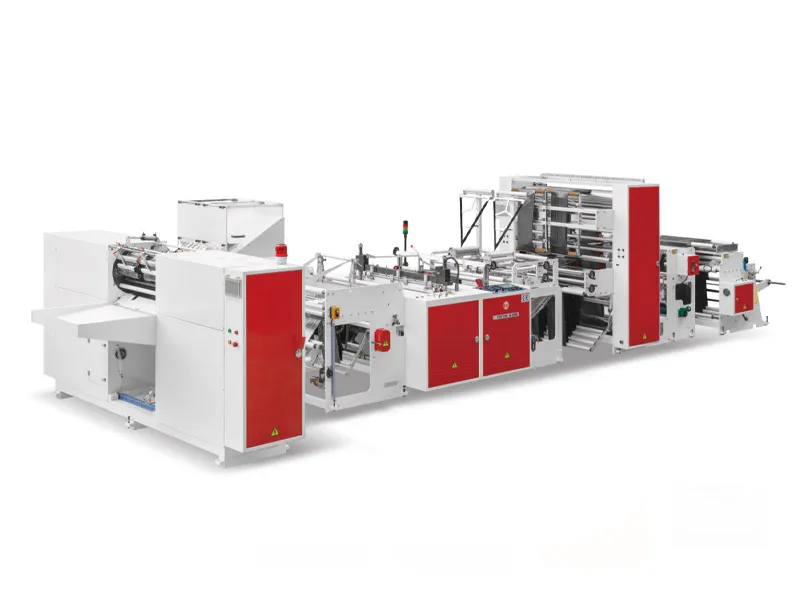
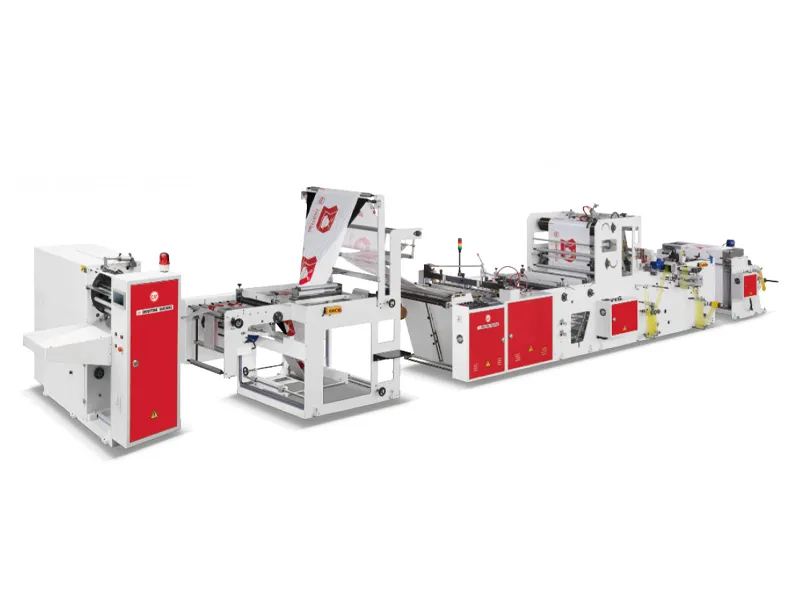
Which brings me to the setup that actually solves this mess without creating new headaches. If you’re running mixed materials, multiple bag widths, and your current winder feels like it was designed by someone who’s never actually finished a bag, you need equipment built around flexible manufacturing with modular tooling. The roller garbage bag machine from Chovyplas handles exactly this—dual-lane processing, quick-change sealing modules, and a tension system that adapts to film thickness without operator guesswork. View technical specifications and configuration options here. But more importantly, it ships with a winding section that doesn’t treat every bag like it’s the same.
What You Actually Need to Check Before Signing
Spend your pre-purchase time on the finishing end. Ask your potential supplier for a live demonstration winding three different film gauges back to back. Watch the roll extraction process. Is it smooth? Does the conveyor handle full rolls without edge damage? Can the operator switch between cored and coreless roll production without a wrench set?
Check the computerized electronic management of the whole cycle—not just the bag maker. A monitor that logs stoppage causes and displays maintenance instructions saves your night shift from hunting for the manual at 2 AM. That’s not a luxury. That’s operational sanity.
Look at the hot knife system. Some winders still use resistive wire cutoffs that leave melted tails. Better systems incorporate cold pre-cutting with adjustable toothed blades—clean perforations without burnt film residue mucking up the sealing station.
And ask about those spindle bearings. Continuous winding puts serious lateral load on spindle supports. Cheap machines use standard bearings that fail at 3,000 hours. Good ones spec industrial-grade components rated for 20,000 hours. That difference alone pays for the upgrade inside a single fiscal year.
The Bottom Line on Finishing
Your winding tech determines whether your bag line is an asset or an argument. Manual changeovers kill throughput. Poor tension control kills product quality. Rigid configurations kill your ability to respond when a customer calls needing a different roll count or core size.
The global bag-on-roll equipment market is growing at nearly 5% annually for a reason—production managers are finally treating finishing as the strategic bottleneck it’s always been. The ones who get ahead are the ones who stop thinking of winding as just another station on the line and start treating it as the keystone of their efficiency.