 English
 Pусский
 Español
 Apr 21,2026
Walk into almost any packaging line, and you will hear it before you see it: the rhythmic thud of a sealing bar pressing down, followed by the hiss of cooling. That sound is heat sealing at work—a process so common that most operators take it for granted. Until something goes wrong.
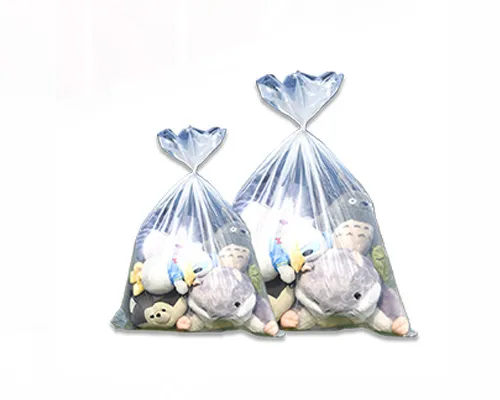
Suddenly, bags that should hold 5 kilograms of dry pet food burst open at the bottom. Pouches of frozen vegetables leak water all over the conveyor. The reject bin fills up in minutes. And the maintenance team starts chasing ghosts: is it the temperature? The pressure? The film itself?
The good news is that heat sealing follows predictable physics. Once you understand how it actually works, most problems become solvable. This guide explains the core principles, the most common failure mechanisms, and how to translate that knowledge into better decisions on your packaging floor.
The Basic Principle: Melting and Pressing Without Burning
Heat sealing is deceptively simple. Two layers of thermoplastic film are heated until their surfaces become viscous, then pressed together. As they cool, polymer chains from both sides intermingle and solidify—creating a bond that can be stronger than the film itself.
But here is where theory meets trouble: the temperature window for most polyethylene or polypropylene films is surprisingly narrow. Heat too little, and the seal lifts with finger pressure. Heat too much, and the film melts through or becomes brittle. The ideal range is typically between 10°C and 20°C above the film's melting point, but below its degradation temperature.
According to sealing industry reference data (based on ASTM F88 standard for seal strength testing), a properly formed heat seal should withstand at least 80% of the parent film's tensile strength. Drop below 50%, and your package becomes a liability during shipping.
Three Critical Parameters That Make or Break a Seal
Most sealing defects trace back to just three variables. Master these, and you eliminate 90% of common bag failures.
1. Temperature: The Goldilocks Zone
Different films demand different temperatures. A few examples based on typical industrial guidelines:
| Film Material | Melting Point (°C) | Recommended Sealing Temp (°C) |
|---|---|---|
| LDPE | 105–115 | 120–140 |
| HDPE | 125–135 | 140–160 |
| PP | 130–165 | 150–180 |
| PET | 250–260 | 180–220 (with cooling) |
Cheap bag machines often use simple thermostats that fluctuate ±15°C. This means you might be sealing at 135°C one minute and 165°C the next—with the same film. The result: inconsistent seals that fail randomly.
Professional sealing systems use PID controllers with thermocouple feedback, maintaining temperature within ±1°C. This precision allows you to dial in the exact temperature for your specific film structure.
2. Dwell Time: The Pressure Duration
Dwell time is how long the heated bar presses against the film. Too short, and the heat hasn't penetrated through both layers. Too long, and you risk melting the film or creating a hard, brittle seal edge.
For a typical 50-micron LDPE bag, the ideal dwell time is around 0.5 to 1.0 seconds. Thicker films or multi-layer laminates may need 1.5 to 2.5 seconds. Many operators set dwell time by ear—longer than necessary—which wastes cycle time and overheats seals.
3. Pressure: The Squeeze Factor
Pressure ensures intimate contact between the two film layers. But more is not always better. Excessive pressure can squeeze molten polymer out of the seal area, creating thin, weak spots. Insufficient pressure leaves microscopic air gaps that become leak paths.
The rule of thumb: apply just enough pressure to eliminate visible air between layers. For most bag sealing applications, 2–4 bar (30–60 psi) is sufficient. You can verify seal quality by performing a "peel test" after cooling.
Common Misconceptions That Waste Production Time
Misconception #1: "Higher temperature always gives stronger seals."
False. Beyond the optimal range, heat causes polymer degradation. Seals become brittle and crack under vibration. In accelerated aging tests, overheated seals lose 40% of their strength after just two weeks of storage.
Misconception #2: "If the seal looks flat, it's good."
Visually flat seals can still have microscopic channels. The only reliable field check is a manual peel test or a burst test. Some quality-conscious packaging lines perform seal strength checks every 500 cycles.
Misconception #3: "All bag sealers work the same way."
This is where equipment design matters enormously. Impulse sealers (which heat only during the press cycle) behave differently from constant heat sealers (which maintain a hot bar continuously). Rotary sealers have their own dynamics. The machine architecture directly affects temperature stability, pressure distribution, and cooling time.
Why Some Sealing Systems Deliver Consistent Results While Others Don't
Let us talk about the hardware behind the heat. A sealing system is more than a heating element and a timer. Four engineering factors separate reliable bag makers from frustration machines:
- Heater Response Time – Thin, cheap heaters cannot recover temperature quickly after each seal. If you run at 40 cycles per minute, the heater temperature drops with every bag, leading to progressively weaker seals. Industrial-grade systems use thicker, higher-mass heaters or multi-zone heating for consistent thermal delivery.
- Seal Bar Flatness – A warped or uneven sealing bar creates pressure variations. One edge might seal perfectly while the other side barely touches the film. Quality machines have ground and hardened seal bars with verified flatness within 0.05 mm.
- Cooling Integration – For thick films or high-speed lines, active cooling (water or air channels in the seal bar) dramatically improves seal appearance and strength. Without cooling, the film stays soft longer and can stretch or deform as it moves away.
- Control Logic – Basic machines use simple relay timers. Advanced systems use microprocessor controls with real-time temperature monitoring and automatic compensation for line speed variations.
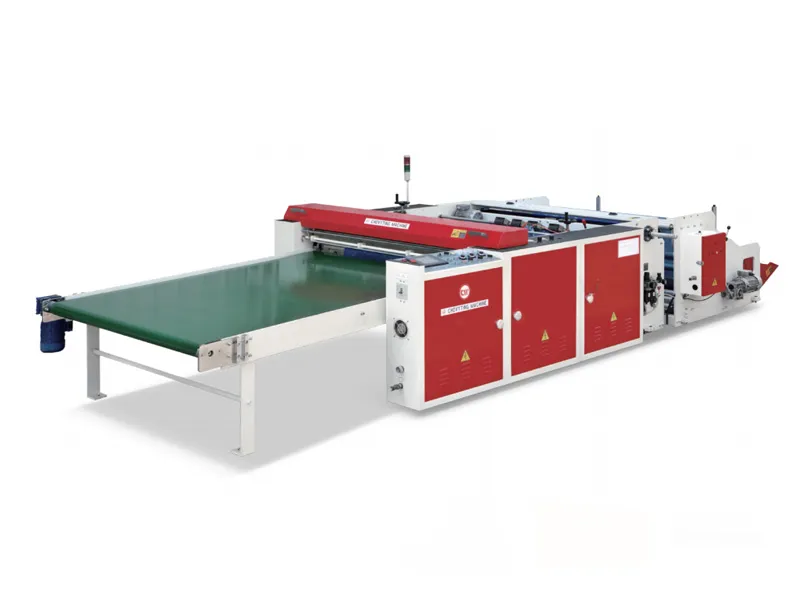
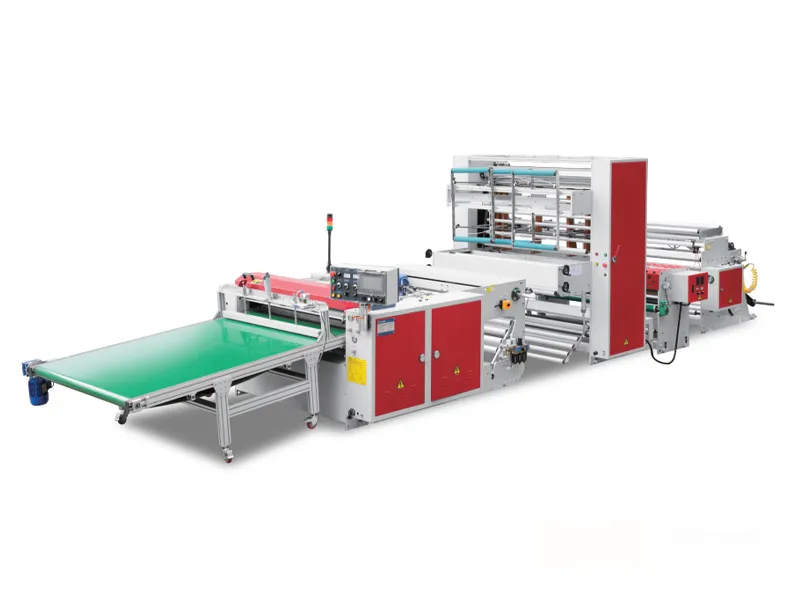
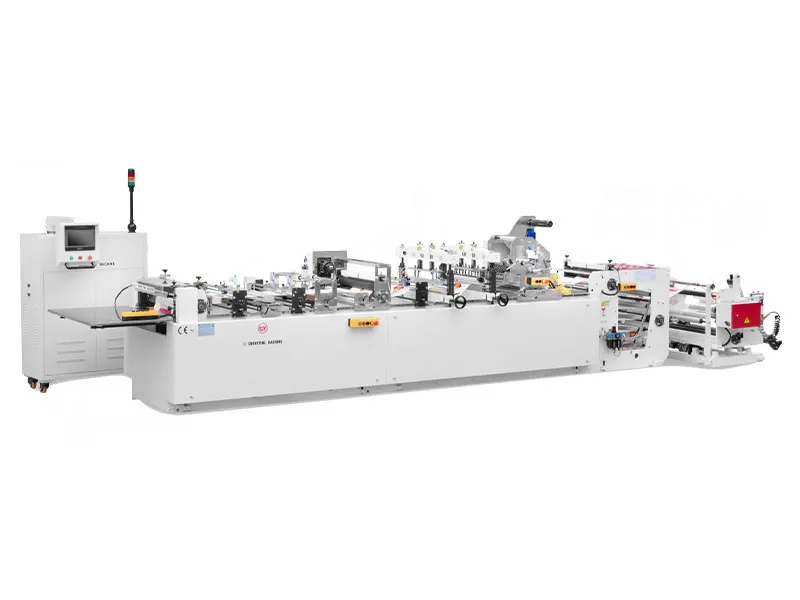
For packaging engineers who need to run multiple film types or change bag sizes frequently, these differences are not academic—they directly affect daily output and scrap rates. [To see how these engineering principles are implemented in a complete bag-making system, you can review the technical specifications of integrated sealing platforms.]
Troubleshooting Common Heat Seal Failures: A Practical Guide
When seals start failing, do not panic. Use this decision tree based on real-world packaging line experience.
Symptom 1: Seal peels apart easily after cooling
-
Likely cause: Insufficient temperature or too short dwell time
-
Check: Raise the temperature by 5°C or increase the dwell time by 0.2 seconds
-
If persists: Verify thermocouple placement and heater condition
Symptom 2: Seal has holes or burn marks
-
Likely cause: Overheating or excessive pressure
-
Check: Reduce the temperature by 10°C first, then reduce pressure if burn marks remain.
-
If it persists: Inspect the sealing bar for debris or rough spots
Symptom 3: Seal strength varies along the bag width
-
Likely cause: Uneven pressure distribution or warped seal bar
-
Check: Run a "paper test" (seal a strip of thermal paper to reveal a pressure pattern)
-
Solution: Replace or resurface the sealing bar
Symptom 4: Seal looks good, but fails after 24 hours
-
Likely cause: Contamination (dust, oil, moisture) on film surface
-
Check: Wipe film with isopropyl alcohol and test again
-
If resolved: Review film storage and handling procedures
A medium-sized food packaging facility tracks its sealing defects for three months using these troubleshooting steps. They reduced reject rates from 3.2% to 0.7% without buying new equipment—simply by optimizing temperature and dwell time for each film batch.
When Film Properties Change: The Hidden Variable
Film manufacturers sometimes change additive packages (slip agents, antistatic compounds, UV stabilizers) without changing the product name. These additives migrate to the film surface and can reduce sealability significantly.
One packaging manager shared: "We ran the same film code for two years. Then suddenly, seals failed every morning. Turned out the supplier added 500 ppm of erucamide slip agent. We had to raise the sealing temperature by 8°C and increase the pressure by 0.5 bar."
This is why advanced sealing machines include data logging for seal parameters. When a problem appears, you can prove whether the film changed or the machine drifted.
How to Extend Seal Bar Life and Reduce Maintenance
Seal bars are consumables. But cheap machines burn through them every 500–1000 hours. Properly designed systems, combined with good practices, can achieve 3000+ hours.
Preventive measures that work:
-
Clean the seal bar and Teflon cover at every shift change. Burnt residue acts as an insulator, forcing the heater to run hotter and shortening its life.
-
Replace Teflon covers as soon as you see scratches or adhesive buildup. A damaged cover creates uneven pressure.
-
Check heater resistance monthly. A drop of more than 10% from the original value indicates aging. Replace proactively rather than waiting for failure.
-
Use a torque wrench on seal bar bolts. Uneven tightening warps the bar over time.
Matching Sealing Technology to Your Application
Not all heat sealing is the same. Here is a quick guide to the major types:
| Technology Type | Best For | Typical Speed | Seal Quality |
|---|---|---|---|
| Impulse sealing | Thin films, intermittent operation | 5–15 seals/min | Good, with cooling |
| Constant heat sealing | High-volume, same film type | 20–60 seals/min | Excellent, stable |
| Hot wire sealing | Very thick films (>150 micron) | 10–25 seals/min | Very good |
| Ultrasonic sealing | Contaminated films (dust, moisture) | 15–40 seals/min | Excellent, no heat damage |
Most bag-making machines for general packaging use either impulse or constant heat sealing. Impulse is more forgiving for beginners. Constant heat delivers higher throughput once dialed in.
If your production line handles multiple film types or runs more than 8 hours daily, constant heat with PID control is the professional choice. [You can explore how different sealing technologies are integrated into purpose-built bag-making equipment for industrial applications.]
Final Thoughts: Heat Sealing Is Science, Not Luck
The physics of heat sealing have been understood for decades. Yet many packaging lines still treat seal quality as unpredictable—blaming the operator or the film when things go wrong. The truth is that temperature, dwell time, and pressure follow clear rules. Measure them, control them, and seals become consistent.
A reliable bag-making system is simply a tool that lets you apply those rules precisely, cycle after cycle. When you move from guessing to knowing, your scrap rate drops, your line uptime rises, and your packaging operation becomes predictable again.
For teams ready to move beyond reactive troubleshooting, exploring a well-documented sealing platform is the next logical step. [See how modular control systems and industrial-grade sealing components come together in professional bag-making solutions.]The right equipment does not eliminate the need for operator skill—it amplifies it.
Disclaimer: Temperature and pressure recommendations are general guidelines based on common packaging films. Always conduct seal strength tests (e.g., ASTM F88) with your specific materials and production conditions. Consult your film supplier for exact thermal properties.