 English
 Pусский
 Español
 May 13,2026
You scheduled eight hours of production. Three hours in, you have barely filled half the daily order. The machine cycles slowly, hesitates between seals, and spends more time waiting than running. The operator shrugs: “It’s always been like this.”
Except it hasn’t. That bag maker used to hum at 60 cycles per minute. Now it struggles to hit 35. Your labor cost per bag just doubled, and the backlog is growing.
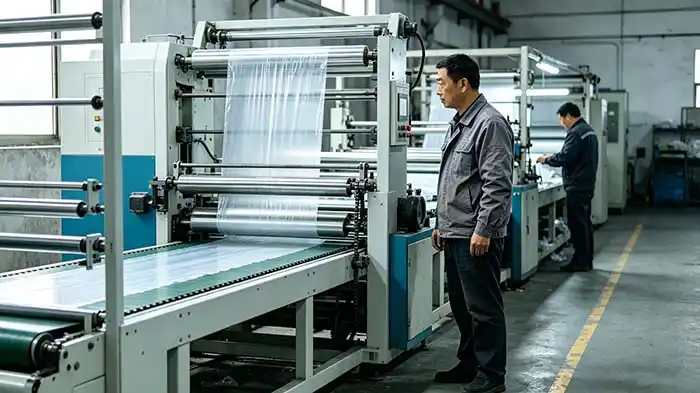
Production slowdowns rarely announce themselves with a bang. They creep in: a seized bearing here, a misaligned photo-eye there, a heater that takes five seconds too long to recover. Individually, each issue adds only a fraction of a second. Together, they rob you of hours every shift.
The good news: most slowdowns are fixable without expensive technicians or replacement parts. This guide walks you through the seven most common speed thieves on bag-making equipment, how to spot them, and exactly what to do.
1. Worn Drive Belts: The Silent Speed Killer
Drive belts transfer motor power to the film pull rollers. Over time, they stretch, glaze, or develop cracks. When a belt slips, the film moves more slowly than the motor expects. The machine’s controller keeps waiting for the film to reach the next position before firing the seal bar.
Diagnosis: With the machine off, press on the belt midway between pulleys. It should deflect no more than 1 cm. Also look for glazing (shiny, hard surface) or frayed edges.
Fix: Replace belts every 2,000 operating hours proactively. Use genuine or spec-matched belts—automotive belts often lack the flexibility needed for small pulleys.
Expected speed gain: 10–15% if the belts were slipping badly.
2. Sealing Bar Recovery Time: Hidden Cycle Extension
Every time the sealing bar presses down, it loses heat to the film. A low-mass heater or undersized element takes 2–3 seconds to return to the set temperature. The machine’s logic often waits for that signal before allowing the next cycle. That waiting adds up: at 40 cycles per minute, a 1-second wait costs 40 seconds every minute—literally half your output.
Diagnosis: Watch the temperature display during production. If it drops more than 10°C after each seal and takes over 2 seconds to recover, you have a heater response problem.
Fix: Upgrade to a higher-wattage heater with a PID controller that applies full power immediately after sealing. Also check for dirty Teflon covers—they act as thermal insulation.
Expected speed gain: 20–30% on machines with undersized heaters.
3. Photoelectric Sensor Misalignment or Contamination
The photo-eye tells the machine when the film has reached the correct length. Dust, film dust, or slight vibration can shift the sensor or cloud its lens. When the signal is intermittent, the controller adds safety delays “just in case” or misses the mark entirely, forcing a re-feed cycle.
Diagnosis: Clean the sensor lens with isopropyl alcohol and a lint-free wipe. Then run a test: mark the film with a pen at the cut point. After 100 cycles, check if the cut position drifts by more than 2 mm.
Fix: Re-aim the sensor toward reflective tape or a high-contrast mark. For dusty environments, install an air purge nozzle that blows a gentle stream across the lens.
Expected speed gain: 5–10% plus reduced mis-cuts.
4. Air Cylinder Speed Controls Set Too Conservatively
Many bag makers use pneumatic cylinders for sealing or cutting. The flow control valves (small screws on the cylinder ports) are often left at factory settings—slow to prevent slamming. But “slow for safety” becomes “cripplingly slow” over time as seals stiffen or lubricant thickens.
Diagnosis: Listen to the cylinder extend and retract. A smooth “shhhhh” is fine. A hesitant “shh…shh…shh” or a 0.5-second pause at the end means the flow control is too tight.
Fix: Turn the adjustment screw on the cylinder’s exhaust port 1/8 turn counter-clockwise. Increase until motion is brisk but not jarring. Test seal quality after each adjustment.
Expected speed gain: 5–15%, depending on original settings.
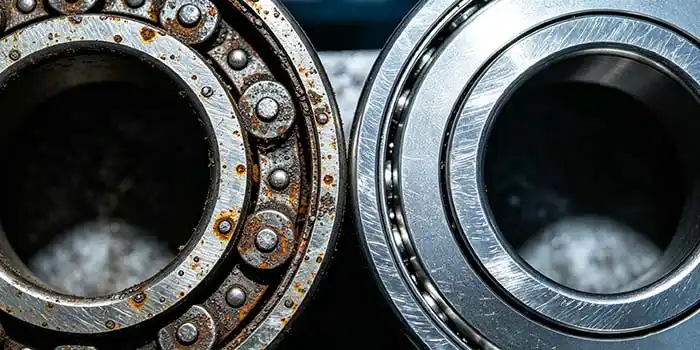
5. Mechanical Friction: Worn Bearings and Bushings
Slow accumulation of dust, dried grease, or worn bearings creates drag. The motor works harder, draws more current, and the drive system may trigger thermal slowdowns or reduced torque.
Diagnosis: Disconnect the main power. Manually turn the pull rollers, seal bar cam, and cutter shaft. They should rotate with light finger pressure. Any grinding, notchiness, or resistance indicates a problem.
Fix: Replace bearings that feel rough. Clean and re-grease linear bushings with food-grade grease (if food packaging) or lithium grease. Check for bent shafts—a dial indicator runout beyond 0.1 mm requires straightening or replacement.
Expected speed gain: 10–25% on older machines that have never seen bearing maintenance.
6. Outdated Control Logic or Wrong Parameters
Some machines use programmable logic controllers (PLCs) with adjustable timing values. If an operator changed the “seal dwell” from 0.4 to 0.8 seconds six months ago and forgot, you are running at half speed for no reason. Similarly, “cooling time” parameters are often set longer than needed.
Diagnosis: Access the machine’s parameter menu. Compare current values with the original factory list (usually in the manual). Pay special attention to:
-
Seal dwell time (should be 0.3–0.7 seconds for most films)
-
Cooling delay (often 0.2–0.4 seconds, not 1+ seconds)
-
Photo-eye debounce time (should be 10–20 ms, not 100 ms)
Fix: Reset parameters to factory defaults for your film type. Gradually reduce dwell time in 0.05-second increments until seal strength starts dropping, then add back 0.05 seconds.
Expected speed gain: 15–40% if parameters had been set arbitrarily.
7. Undersized or Failing Motor Drive System
Variable frequency drives (VFDs) or servo drives can enter current-limit mode if overloaded. The drive reduces speed to protect itself. This often happens when mechanical friction increases or when the drive was underspecified from the start.
Diagnosis: Read the drive’s display while running. If it shows “OL”, “CL”, or a high amperage near the drive’s rating, you have a power bottleneck.
Fix: First, eliminate mechanical friction. If the drive still runs at reduced speed, replace it with the next-higher current rating. Also,o check that the drive’s acceleration time isn’t set to 5+ seconds—2 seconds is typical for bag makers.
Expected speed gain: 20–50% in severe cases, but usually combined with fixing other issues first.
Putting It All Together: A Speedy Recovery Plan
Rather than guessing, run this one-hour speed restoration protocol:
| Time | Action |
|---|---|
| 0–5 min | Clean photo-eyes and check belt tension |
| 5–15 min | Manually rotate all moving parts; feel for resistance |
| 15–25 min | Observe temperature drop after each seal; note recovery time |
| 25–35 min | Time 10 full cycles with a stopwatch; calculate cycles per minute |
| 35–50 min | Adjust flow controls and parameter settings one by one |
| 50–60 min | Measure new cycle time and test seal quality |
One medium-sized packaging company followed this exact routine on an older line. They increased output from 28 to 51 bags per minute—an 82% gain—without replacing any major components. The only costs: two belts and one hour of maintenance time.
When Fixes Aren't Enough: Knowing When to Upgrade
Sometimes, a machine is mechanically sound but fundamentally limited. Older designs might lack:
-
Servo-driven film pull (which replaces clutch-brake systems that limit speed to 40 cycles/min)
-
Digital PID temperature control (on/off thermostats cannot maintain high-speed consistency)
-
Independent seal and cut stations (combined stations force a slower single pace)
If you have addressed all seven issues and still cannot meet your required throughput, the bottleneck is the machine architecture itself. In that case, upgrading to a purpose-designed system with servo drives and multi-station operation will deliver immediate gains.
For packaging lines that need sustained speeds above 60 bags per minute with multiple film types, exploring a modern platform is worth the investment. You can compare performance specifications of different bag-making architectures to see what speed range fits your production target.
Preventive Measures to Keep Speeds High
Once you restore production speed, keep it there with these habits:
-
Weekly: Clean sensors, check belt tension, listen for bearing noise
-
Monthly: Measure seal bar flatness, verify temperature accuracy with a contact thermometer
-
Quarterly: Replace drive belts, re-lube all bearings, and back up controller parameters
-
Yearly: Inspect heater resistance, check motor coupling alignment, update firmware if applicable
One plant manager shared: “We used to accept 15% slower as ‘normal aging.’ Now we treat speed loss as a defect. Our OEE went from 63% to 81% in six months.”
Your Next Step: Measure, Fix, Then Decide
Slow production is not a mystery. It is a collection of small, measurable problems. Each of the seven issues above leaves evidence: temperature drops, belt slack, parameter drift, and friction. Find the evidence, apply the fix, and watch your cycle time fall.
If, after all repairs, you still need higher output, that is a strategic decision—not a crisis. At that point, you know exactly what your speed ceiling is and what modern equipment must exceed.
For teams that have maximized their current machine and need the next performance tier, professional-grade bag-making systems offer documented speed ratings and servo-driven precision. See how integrated drive and temperature control systems eliminate most of the slowdown causes discussed above.
Do not settle for “always been like this.” Your line can run faster. Start with the belt. Then the heater. Then the parameters. One fix at a time, you will get your production back.
Disclaimer: Speed improvements depend on the original condition of your specific machine. Always follow manufacturer safety procedures when adjusting mechanical or electrical components. Perform seal strength tests after any speed or parameter change to maintain package integrity.
Note: The images in this article are for reference only.