 English
 Pусский
 Español
 May 14,2026
Article Overview: This article provides a comprehensive overview of the shopping bag production line, covering the key stages from blown film extrusion to the finished T-shirt (vest) bag. It is intended for technical buyers and operations leaders evaluating bag making equipment. We explain core processes, machinery options, and automation considerations without promoting any single manufacturer.
Understanding the Shopping Bag Production Line
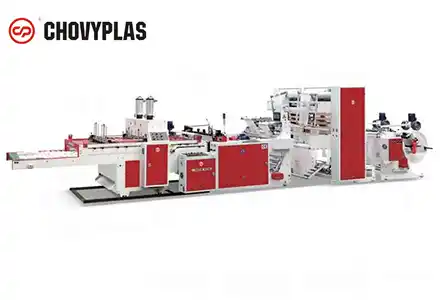
A shopping bag production line is an integrated sequence of machines that convert raw plastic resin into finished bags ready for retail use. The most common output of such a line is the T-shirt bag (also called a vest bag), characterized by its die-cut handles and open-top design. However, the same fundamental line can be adapted to produce patch handle bags, loop handle bags, or bottom-seal bags with minor equipment variations.
The typical line consists of four primary stages: blown film extrusion, printing (optional), bag making, and handle finishing. Each stage requires specific machinery that must be matched in speed and capacity to avoid bottlenecks. For buyers evaluating equipment, it is essential to consider the entire line as a system rather than individual machines.
Equipment suppliers such as Chovyplas Machinery offer modular solutions that allow buyers to configure a line for their specific bag type and production volume. Understanding the function of each machine helps in making informed procurement decisions.
Blown Film Extrusion: The Foundation of Bag Making
Blown film extrusion is the process of melting plastic resin and forming a continuous tubular film. For shopping bags, common materials include low-density polyethylene (LDPE), linear low-density polyethylene (LLDPE), high-density polyethylene (HDPE), and blends containing recycled content. The choice of material affects bag strength, clarity, and cost.
The extruder heats the resin and forces it through a circular die. Air is blown through the die center to inflate the tube, which is then cooled by an air ring and collapsed by nip rollers. The resulting lay-flat film is wound into rolls. Key parameters include film thickness (typically 15–50 microns for shopping bags), lay-flat width (which determines bag width), and gusset size (for side gussets).
Modern blown film lines incorporate automatic gauge control, multi-layer capability, and high-speed winders. For a shopping bag line, the extruder output must be sufficient to feed the downstream bag making machine. Typical extrusion rates range from 50 to 200 kg/h depending on die size and material.

Converting Film into Shopping Bags: The Bag Making Machine
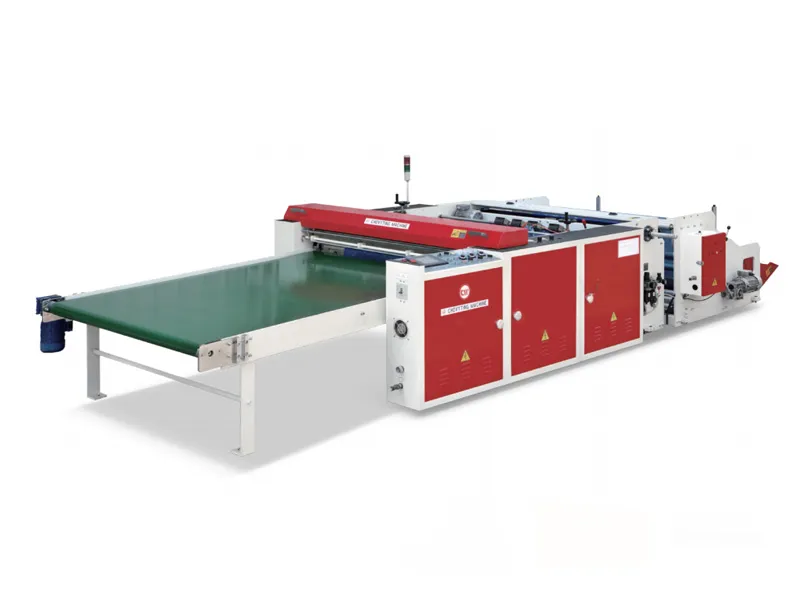
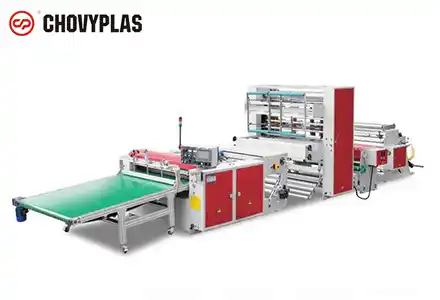
The bag making machine is the core of the production line. It takes the film roll from the extruder (or from a separate printing step) and converts it into individual bags. For T-shirt bags, the machine performs multiple operations in a continuous process: unwinding, film alignment, hot slitting to create handle cutouts, side gusset folding, bottom sealing, and cutting to length.
Hot slitting uses heated blades to cut and simultaneously seal the handle profile, which is critical for clean edges and strong handles. The flying knife system then cuts the bag to the desired length. Many machines also include a wicketer or stacking conveyor that aligns bags into packs for easy packing.
Servo-driven systems provide precise control over film feed and registration, allowing speeds of up to 150 cycles per minute. PLC (programmable logic controller) with HMI (human-machine interface) enables operators to adjust bag length, sealing temperature, and cut position on the fly. For buyers, evaluating the machine's automation level is vital for labor efficiency and consistency.
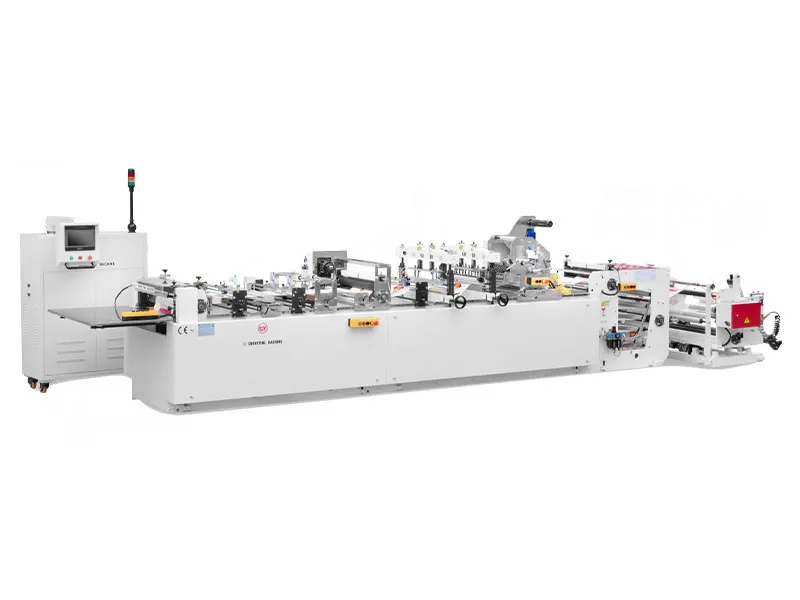
Bag making machine products are available in various configurations: dedicated T-shirt bag machines, multi-function machines that can switch between bag types, and high-speed models for large-volume production. The choice depends on the specific bag design and expected throughput.
Handle Attachment and Finishing Options
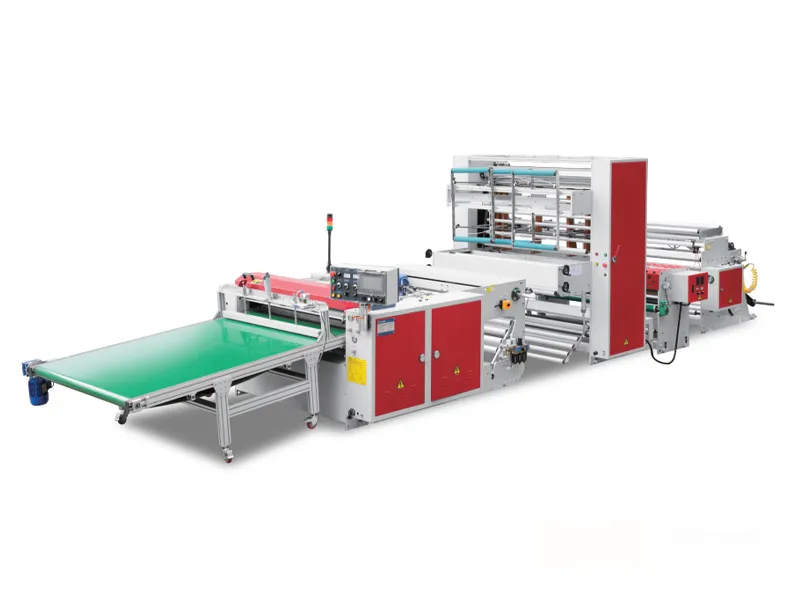
Not all shopping bags have integral die-cut handles. Many retail applications require additional handle attachments, such as glue patch handles or loop handles. These finishing operations are performed by specialized machines that can be integrated into the line or run offline.
Glue patch handle machines apply a pre-cut patch of plastic or paper to the bag body using hot melt adhesive. The process requires precise registration and temperature control. An example is the Fully Automatic High Speed Inside Glue Patch Handle Bag Making Machine, which can operate at speeds exceeding 100 bags per minute.
Loop handle machines create a handle by forming a loop of film or rope that is sealed or glued to the bag. These machines are commonly used for higher-end retail bags. For T-shirt bags, the handle is cut directly from the bag film, eliminating the need for a separate attachment step.
When planning a production line, buyers should consider whether their target market requires handled bags or die-cut handle bags. The finishing equipment adds capital cost and floor space, but it also expands product range. Many manufacturers choose a modular line that can be reconfigured for different handle types.
Automation and Quality Control Considerations
Automation in a shopping bag production line reduces labor cost, increases output, and improves product consistency. Key automation features include automatic tension control, auto-splicing unwind stands, servo-driven sealing and cutting, and real-time monitoring via PLC. Manufacturing ability in this context refers to the capability to produce bags with tight tolerances on dimensions and seal strength.
Quality control begins with the blown film process—thickness uniformity directly affects bag strength. In bag making, sealing temperature must be regulated within ±2°C to ensure leak-proof seals without burning the film. Photoelectric sensors detect misregistration and reject defective bags. Modern machines can log production data and alert operators to deviations.
For high-volume producers, investing in a fully automated line with centralized control pays off through reduced downtime and waste. However, even semi-automatic lines can be effective for lower volumes or diverse product runs. Buyers should match automation level to their production requirements and operator skill set.
Frequently Asked Questions
What is the typical output speed of a T-shirt bag making machine?
Modern servo-driven machines produce 120–160 bags per minute, depending on bag size and material. Older cam-driven machines run at 60–80 bags per minute.
Can the same line produce both T-shirt bags and patch handle bags?
Yes, with modular attachment modules. Some multi-function machines can switch between die-cut and patch handle modes with changeover times under 30 minutes.
What film thickness is best for shopping bags?
Common thicknesses are 15–30 microns for lightweight retail bags and 30–50 microns for heavy-duty shopping bags. Thicker films require slower machine speeds and higher sealing temperatures.
How important is the blown film quality?
Extremely important. Inconsistent film thickness leads to bag sealing issues and handle tearing. Investment in a quality extruder with automatic gauge control pays for itself in reduced waste.
Where can I see machine videos and demonstrations?
Video demonstrations of various bag making machines are available online, showing actual operation and output quality.
Conclusion
The shopping bag production line is a multi-stage system that begins with blown film extrusion and ends with finished bags ready for packing. Each stage—film production, bag conversion, handle finishing—requires careful equipment selection to match volume, bag design, and automation goals. By understanding the process flow and machine capabilities, technical buyers can make informed decisions that balance cost, efficiency, and product quality.
Whether you are setting up a new line or upgrading an existing one, evaluating the entire line as a cohesive system is the most effective approach. Consult with equipment suppliers to review your specific needs, and consider visiting a manufacturing facility to see the machines in operation.