 English
 Pусский
 Español
 May 18,2026
When you run a plastic bag manufacturing line, the resin you choose isn’t just about material cost. It directly impacts how your bag-making machine performs – from sealing temperature to production speed and final bag strength.
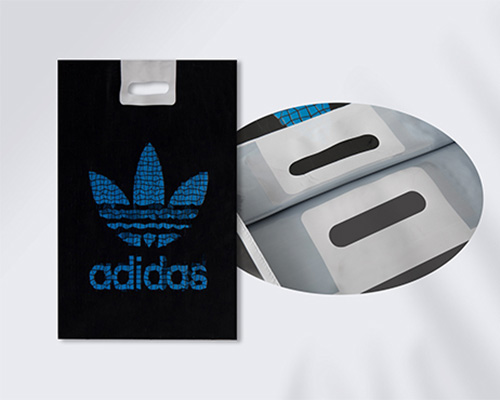
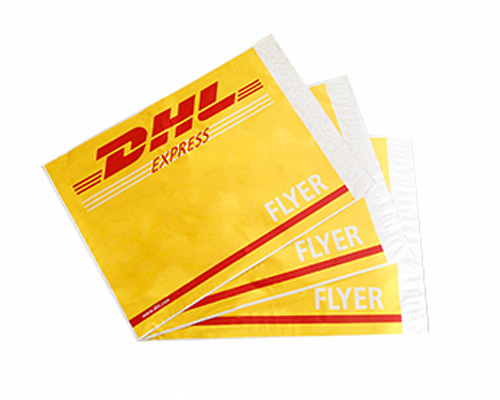
Two of the most common polymers in the industry are HDPE and LDPE. Each behaves differently under heat, tension, and pressure. So which one gives you better output? And more importantly, which one works best with your existing bag-making equipment?
Let’s break down the technical and practical differences, then help you decide whether you need to adjust your process – or upgrade to a more reliable bag-making machinery that handles both materials seamlessly.
Material Basics: What Makes HDPE and LDPE Different?
At the molecular level, HDPE has a linear structure with very little branching. This allows molecules to pack tightly, resulting in higher density, crystallinity, and tensile strength. LDPE, on the other hand, has significant short- and long-chain branching, which prevents tight packing – making it softer, more flexible, but weaker under load.
| Property | HDPE | LDPE |
|---|---|---|
| Density | 0.941 – 0.965 | 0.910 – 0.925 |
| Tensile strength | 20 – 30 | 8 – 20 |
| Elongation at break | 200 – 600% | 400 – 800% |
| Melting point | 120 – 130 | 105 – 115 |
| Film stiffness | High | Low |
| Moisture barrier | Excellent | Moderate |
Data based on standard ASTM D1505 (density) and D882 (tensile properties).
For bag making, HDPE delivers thin, strong bags often used in grocery, T-shirt bags, trash can liners, and merchandise bags. LDPE produces softer, clingier films for food wrap, bubble mailers, and heavy-duty industrial liners.
How Each Material Affects Your Bag Making Machine
Your bag-making machine – especially the sealing station – must adapt to each material’s thermal and mechanical behavior. Here’s what changes when you switch from HDPE to LDPE.
Sealing Temperature & Dwell Time
HDPE’s higher melting point requires hotter sealing jaws, typically 130–150°C. Because it solidifies quickly, dwell time can be shorter – allowing higher line speeds.
LDPE melts at 105–115°C, but its high viscosity in the molten state demands longer dwell time or higher pressure to form a strong seal. Running LDPE on a machine tuned for HDPE often leads to weak seals or film burn.
Film Tension and Pulling Force
HDPE film has low elasticity and high stiffness – it resists stretching. The feeding and pulling mechanisms need precise tension control to avoid tearing or wrinkling.
LDPE stretches easily. Without proper dancer roller feedback, it can elongate, causing registration errors in printed bags.
Cut Stack and Bottom Sealing Consistency
For bottom-sealed bags, both materials require different knives and heat settings. HDPE produces clean cuts with standard blades, but LDPE tends to “string” unless the cut-off temperature is carefully managed.
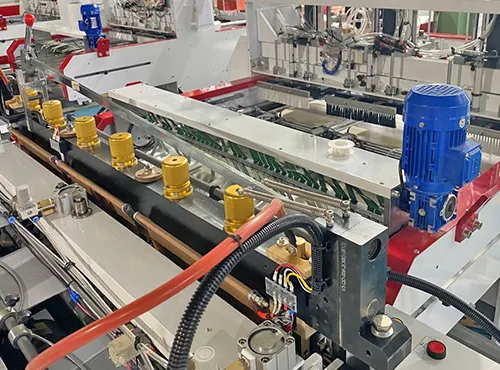
If your line currently runs only HDPE, adding LDPE orders will demand recalibration – or investing in a versatile plastic bag production solution with programmable heat profiles and servo-driven tension control.
Real-World Production Scenarios: Which Bag Wins?
Scenario A: High-volume grocery T-shirt bags
Winner: HDPE
You need thin-gauge, strong bags that open easily. HDPE’s stiffness helps the bag stand open on dispensing racks. A standard [bottom sealing bag making machine] can run HDPE at 120–150 cycles/minute, provided the sealing temperature is stable.
Scenario B: Lightweight produce bags with printed logos
Winner: LDPE
Produce bags need softness and puncture resistance for berries or root vegetables. LDPE’s flexibility also reduces noise (no rustling). However, LDPE runs slower – often 30–50% fewer cycles per minute – due to longer sealing dwell time and careful tension management.
Scenario C: Mixed-material production
Winner: Depends on your machine
If you frequently switch between HDPE and LDPE, you need a bag-making machine with digital heat control, independent top/bottom jaw temperatures, and a robust unwind brake system. Many older machines struggle with rapid changeovers, leading to scrap and downtime.
Pro tip from shop floor experience: One of our clients running a job shop in Texas found that 70% of their LDPE sealing defects came from using the same jaw pressure as HDPE. After switching to a Chovyplas’ advanced sealing technology with adjustable pressure profiling, their rejection rate dropped from 8% to under 2%.
Decision Guide: How to Choose
Ask yourself four questions:
-
What is your primary bag application?
-
Stiff, thin, high-volume → HDPE
-
Soft, clingy, puncture-resistant → LDPE
-
-
What is your current machine’s thermal range?
-
Max jaw temp below 120°C? You cannot run HDPE reliably.
-
No independent temperature control for top/bottom jaws? LDPE will cause curling.
-
-
Do you have a servo-driven unwind tensioner?
-
Without it, switching between HDPE (stiff) and LDPE (stretchy) causes registration drift.
-
-
What is your acceptable scrap rate?
-
Under 2%? You need a machine with closed-loop heat and pressure feedback – standard on newer industrial models.
-
If you plan to run both materials regularly, consider upgrading to a modular bag-making line that stores material-specific recipes. Many customizable plastic bag production systems now include touchscreen presets – switch from HDPE to LDPE in under five minutes.
Final Verdict: No Absolute Winner – But a Clear Strategy
HDPE wins on speed, stiffness, and material economy for thin bags. LDPE wins on flexibility, low-temperature sealing, and impact resistance. Your bag-making machine’s capability ultimately decides which “wins” for your business.
If you run a dedicated line for a single material, buy the cheapest adequate machine. But if you serve diverse customers or want to hedge against resin price fluctuations, invest in a versatile bag-making machine that handles both – with precise temperature zoning, servo tension, and quick-change sealing jaws.
Get Professional Support for Your Bag Making Line
Choosing between HDPE and LDPE is only half the battle. The real challenge is ensuring your equipment delivers consistent seals, accurate cuts, and low waste – regardless of the resin.
If you are looking for a reliable partner that understands both material science and practical production, explore Chovyplas’ industrial bag-making solutions. Our systems are engineered with independent jaw temperature control, servo-driven unwind, and recipe storage for fast changeovers between HDPE, LDPE, and even recyclable blends.
Whether you run a small job shop or a high-volume factory, having the right machine makes both materials winners.
Disclaimer: Material properties referenced from ASTM standards. Actual performance may vary based on film additives, ambient conditions, and machine maintenance. Always test your specific combination.