 English
 Pусский
 Español
 Jul 27,2026
Article Overview: This selection guide helps procurement managers and sourcing teams evaluate handle bag making machines. We cover patch handle, soft loop, and inside glue patch types, matching handle design to product requirements, production capacity trade-offs, and key soft loop features. Use the checklist to reduce procurement risks.
What types of handle bag machines are available?
Handle bag making machines are primarily categorized as patch handle, soft loop, and inside glue patch types. Each uses a distinct handle attachment method suited to specific bag materials and end-use applications. Your choice should align with the bag's weight, material, and desired handle strength.
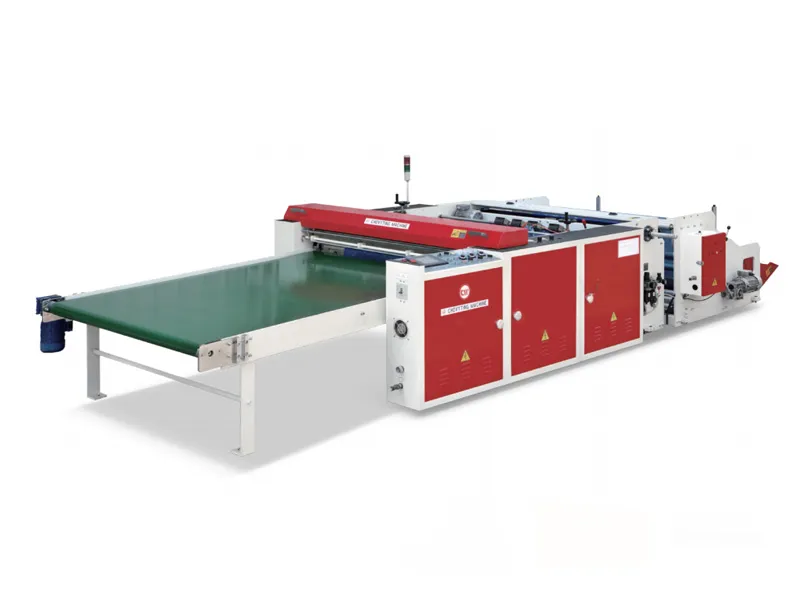
Based on available product lines from manufacturers like CHOVYPLAS, the three main configurations are:
- Patch handle machine
- Applies a separate patch of material (often the same as bag film) onto the bag to form a handle. The patch is typically reinforced with an extra layer, making it suitable for heavy-duty bags such as shopping or carrier bags.
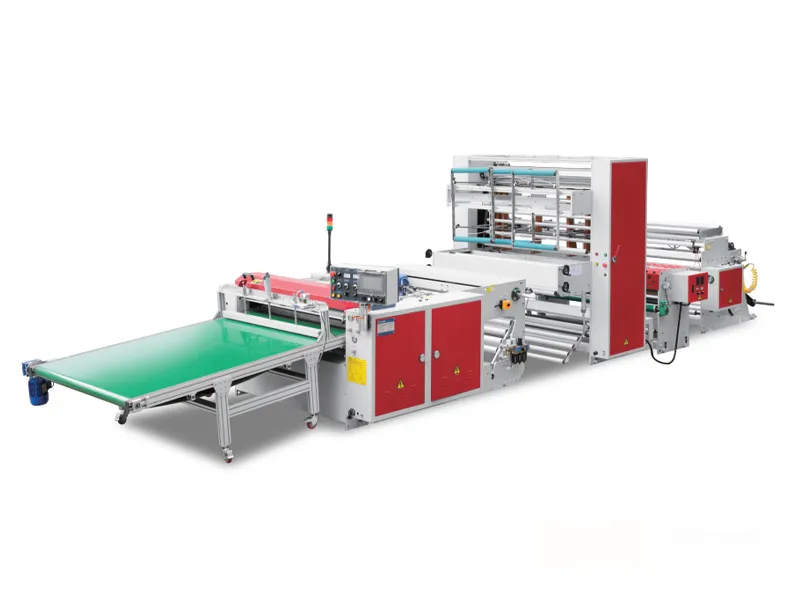
- Soft loop handle machine
- Forms a loop from a thin film strip, which is then welded or glued to the bag body. Ideal for lightweight to medium-weight bags like T-shirt bags and grocery sacks, providing a comfortable grip.
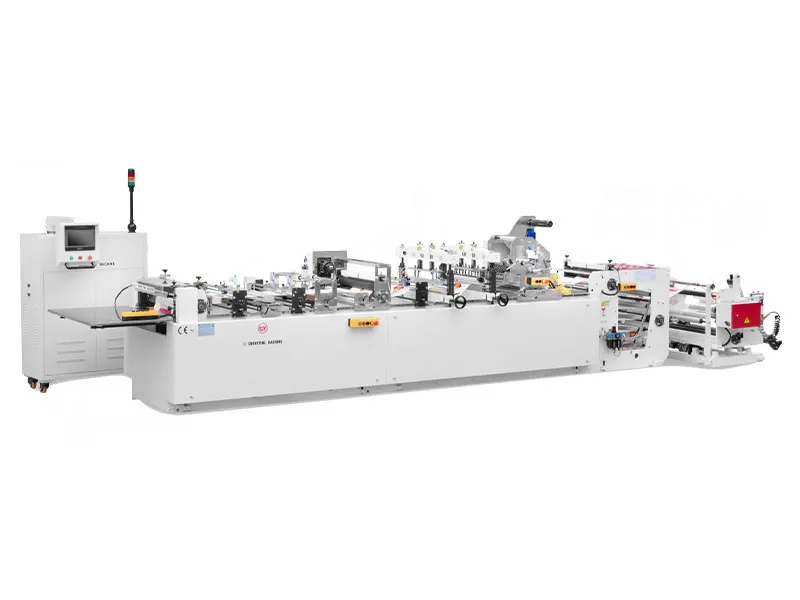
- Inside glue patch machine
- Attaches a patch inside the bag with adhesive, creating a hidden handle reinforcement. Often chosen for bags requiring a clean exterior, such as boutique or gift bags.
Validation checkpoint
When evaluating vendors, request technical drawings or videos showing the handle formation process. Verify that the machine can run your target film thickness and seal temperature range. Ask about material waste percentages during handle attachment.
How do I determine the right handle type for my products?
Match handle type to bag weight, material, and usage: patch handles for heavy bags, soft loops for lighter carry bags, inside glue patch for medium-duty applications. Also consider the handle's load-bearing capacity and the bag's sealing method. Prototype testing is essential.
Use the following decision criteria:
- Bag weight: For bags that will hold more than 5 kg, patch handles provide superior strength. Soft loops are suitable for loads up to 3 kg. Inside glue patch handles can handle intermediate weights.
- Material: HDPE bags often work well with soft loops; LDPE or laminated materials may require patch handles for secure adhesion due to surface tension differences.
- Usage environment: If the bag will be carried by hand repeatedly, a reinforced patch handle reduces the risk of tearing. For retail bags where appearance matters, inside glue patch offers a clean finish.
- Sealing method: Machines that use hot-melt adhesive or ultrasonic welding may be better suited for certain handle types. Check compatibility with your bag film's melting point and surface energy.
Step 1: Define bag specifications
Determine bag dimensions, material type (HDPE, LDPE, LLDPE, or laminate), and typical fill weight. This narrows possible handle types.
Step 2: Evaluate handle strength requirements
Conduct a pull test on prototype bags with each handle type. Measure the failure load and select the minimum that meets your safety margin. For example, if your bag will carry 3 kg, a handle that fails at 5 kg provides a reasonable safety factor.
Step 3: Consider production speed
Patch handle machines often have longer cycle times due to extra material feeding and pressing. Soft loop machines can operate at higher speeds for lightweight bags. Evaluate whether speed or handle strength is your priority.
What production capacity should I look for in a handle bag machine?
Production capacity depends on cycle time and bag size. Look for a machine that matches your required output per hour while maintaining consistent handle quality. Verify the machine's maximum bag width and length to ensure compatibility with your product range. Consider changeover time for different handle types.
Capacity involves trade-offs that affect overall equipment effectiveness (OEE):
- Cycle time per bag: Shorter cycles mean higher output, but may compromise handle alignment or seal integrity. Ask the supplier for cycle time at different bag sizes, not just the smallest bag.
- Bag size range: Machines with larger max width can handle bigger bags but may have slower cycles for small bags due to increased travel distance. Assess your product mix.
- Changeover time: If you run multiple handle types or bag sizes, rapid changeover is critical. Check if the machine offers tool-less adjustments and ask for documented changeover times.
- Automation level: Fully automatic machines reduce labor but may have higher upfront cost. Compare manual vs. automatic feeding and stacking options.
| Machine type | Typical cycle time | Max bag width | Recommended bag weight |
|---|---|---|---|
| Patch handle | 0.8–1.2 sec | 600 mm | Heavy (≥5 kg) |
| Soft loop | 0.5–0.8 sec | 500 mm | Light to medium (≤3 kg) |
| Inside glue patch | 1.0–1.5 sec | 450 mm | Medium (3–5 kg) |
Note: The above figures are hypothetical examples. Always request actual performance data from the supplier for your specific bag specification.
What are the key features of a soft loop handle bag machine?
Key features include precise loop forming, reliable gluing or ultrasonic welding, efficient drying or curing systems, and adjustable loop length. These ensure consistent soft loop handles that are comfortable to carry. A servo-driven loop feeding mechanism improves precision and reduces material waste.
A typical fully automatic soft loop handle bag machine incorporates the following stations:
- Loop forming station: Feeds a thin film strip, folds it into a loop, and cuts it to the preset length. Look for servo-driven systems that allow precise length adjustment and repeatability of ±2 mm.
- Gluing or welding mechanism: Applies adhesive or ultrasonic energy to attach the loop to the bag body. Hot-melt glue systems require temperature control and may need a drying tunnel; ultrasonic welding eliminates consumables but may be limited to certain film types.
- Pressure and drying section: Applies pressure to secure the bond and may include a heating tunnel to accelerate curing. Consistent pressure across the entire handle area is critical to avoid detachment.
- Sealing and cutting unit: The bag bottom is sealed and cut to length. The machine must synchronize handle application with bag travel to avoid misalignment. Check for servo-driven sealing systems that allow independent adjustment.
Step 1: Verify loop length adjustment range
Ensure the machine can produce loop lengths from 150 mm to 400 mm (or your required range) with repeatability of ±2 mm. Ask for a demonstration with your film.
Step 2: Test glue adhesion
Run a peel test on sample bags with your film under load. Check that the handle does not detach under the maximum expected weight. For ultrasonic welding, test seam strength.
Step 3: Check drying time
If using hot-melt adhesive, confirm that the drying section can cure the glue within the cycle time to avoid smearing or weak bonds. Ask about temperature control accuracy.
FAQ
Can one machine handle multiple handle types?
Some machines are designed for interchangeability via modular stations, but most are optimized for a single handle type. Multi-function machines exist but often compromise speed or reliability. Assess your production volume: if you need extreme flexibility, consider dedicating separate lines or evaluating modular designs.
What is the typical lead time for a handle bag machine?
Lead times vary by manufacturer and customization level. Standard configurations may ship in 30–60 days, while fully customized lines can take 90–120 days. Always include installation, commissioning, and operator training time in your procurement schedule. Ask about rush options if needed.
Do I need auxiliary equipment for handle attachment?
Most modern handle bag machines are fully automatic and include all necessary stations. However, some patch handle machines may require a separate film unwind or a pre-punching unit for the handle material. Review the supplier's layout plan to ensure utilities and floor space are sufficient.
Conclusion: Build your handle bag machine evaluation checklist
Choosing the right handle bag making machine requires matching handle type to bag purpose, validating production capacity against your output needs, and inspecting key features for reliability. Use this guide to create a checklist for vendor evaluation:
- Define bag specifications (material, weight, dimensions, intended use).
- Select handle type based on load and usage (patch, soft loop, inside glue).
- Request cycle time data for your specific bag size and handle type.
- Test handle adhesion with your film under production conditions.
- Verify changeover time and ease of adjustment for different configurations.
- Review after-sales support, spare parts availability, and warranty terms.
- Ask for references from similar applications.
For a complete overview of available configurations, explore our bag making machine products and learn about Our manufacturing capabilities and R&D to ensure the supplier can meet your quality standards.