 English
 Pусский
 Español
 Oct 13,2025
Types of Plastic Bag Making Machines: Choose Based on Your Product Needs
Not all plastic bag making machines are the same—they’re categorized by the type of bags they produce, automation level, and production capacity. Selecting the right type starts with clarifying your target product and scale.
1. By Bag Type: Match Machines to Specific Products
Different bag styles require specialized machinery, as each has unique sealing, cutting, and shaping needs:
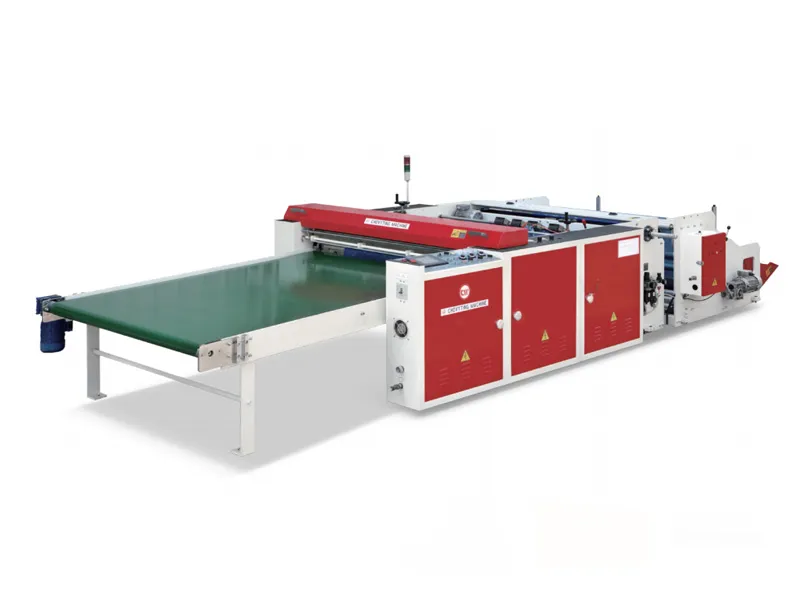
•T-shirt Bag Making Machines: The most common type, designed for producing the lightweight, handle-equipped bags used in supermarkets and convenience stores. They integrate sealing (for the bottom and handles) and cutting in one step, with high speed (500–1,500 bags per hour for small-scale models).
•Flat Bag Making Machines: Used for simple flat bags (e.g., food storage bags, shopping bags without handles). They focus on precise edge sealing and uniform cutting, with adjustable bag lengths to accommodate sizes from 10cm to 100cm.
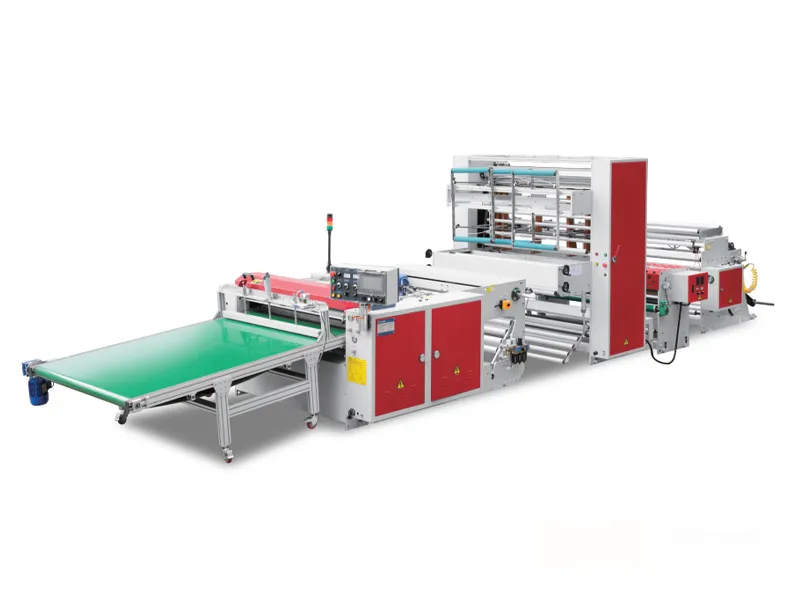
•Gusseted Bag Making Machines: Ideal for bags that expand to hold more volume (e.g., grain bags, laundry detergent packaging). These machines add gussets (folds on the sides) during production, requiring extra components to shape and seal the gusset edges.
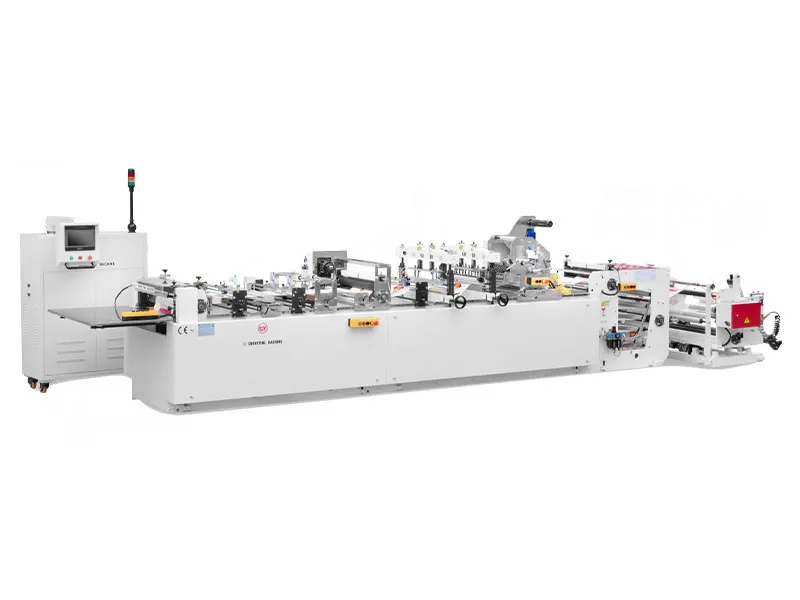
•Zipper Bag Making Machines: Specialized for bags with resealable zippers . They include an additional zipper attachment unit to bond zippers to the bag edges before sealing and cutting—requiring higher precision to avoid zipper misalignment.
2. By Automation Level: Balance Labor and Efficiency
Automation directly impacts labor costs and production consistency:
•Semi-Automatic Machines: Require manual intervention for tasks like film feeding, finished product collection, or parameter adjustments. Suitable for small-scale production (100–500 bags per hour) or startups with limited budgets. They’re easy to operate but have lower efficiency and higher risk of human error.
•Fully Automatic Machines: Handle the entire process—from film unwinding, tension control, sealing, cutting, to finished product stacking—without manual help. They offer high speed (800–3,000 bags per hour), consistent quality, and can be integrated with other equipment (e.g., printing machines). Ideal for medium to large-scale production but have higher upfront costs.
Key Factors to Consider When Selecting a Plastic Bag Making Machine
Choosing the right machine isn’t just about picking a model—it’s about aligning it with your production goals, budget, and long-term plans. Overlooking these factors can lead to inefficient operations or unexpected costs.
1. Production Capacity: Avoid Over or Under-Investment
First, calculate your target monthly/annual production volume. For example:
•If you plan to produce 50,000 T-shirt bags per month, a small-scale fully automatic machine (800–1,200 bags/hour) operating 8 hours a day, 20 days a month will meet your needs.
•If your target is 500,000 bags per month, a medium-scale machine (1,500–2,500 bags/hour) or multiple small machines will be necessary.
Overinvesting in a high-capacity machine for low demand wastes electricity and space; underinvesting will force you to rush production, compromising quality.
2. Compatibility with Raw Materials
Plastic bags are made from different films, and not all machines handle all materials:
•PE film is soft and flexible—most standard machines work with it.
•PP film is stiffer and has a higher melting point—look for machines with adjustable temperature controls (sealing temperature needs to be 180–220°C for PP, vs. 150–180°C for PE).
•Recycled film often has uneven thickness or impurities—choose machines with robust tension control systems to prevent film jamming and ensure smooth sealing.
Always test the machine with your intended film before purchasing—suppliers usually offer sample testing.
3. After-Sales Support and Spare Parts Availability
Machines break down, and delayed repairs can halt production. Prioritize suppliers that offer:
•On-site maintenance: Especially for fully automatic machines, which are complex to repair.
•Fast spare parts delivery: Common parts (e.g., sealing blades, heating elements, sensors) should be available locally or delivered within 3–5 days.
•Training services: Ensure your operators receive hands-on training to use and troubleshoot the machine.
4. Budget: Balance Upfront Cost and Long-Term Value
Semi-automatic machines typically cost 30–50% less than fully automatic ones, but they have higher labor costs over time. For example:
•A small semi-automatic T-shirt bag machine may cost \(5,000–\)8,000, but you’ll need 1–2 operators per shift.
•A small fully automatic machine may cost \(12,000–\)18,000, but it can run with 1 operator for monitoring.
Consider total cost of ownership (TCO)—not just upfront price—including labor, electricity, and maintenance.
Step-by-Step Operational Process for Plastic Bag Making Machines
Proper operation ensures consistent quality, reduces downtime, and extends machine life. Follow this workflow for standard fully automatic plastic bag making machines:
1. Pre-Production Preparation
•Inspect the Machine: Check for loose parts (e.g., screws on the sealing unit), worn components (e.g., blades with nicks), and clean the film path (remove dust or leftover film scraps to prevent jamming).
•Prepare Raw Materials: Unroll the plastic film and load it onto the unwinding unit. Ensure the film is aligned—misalignment causes uneven bag sizes. For printed film, align the print pattern with the cutting line (use the machine’s alignment guide).
2. Test Run and Calibration
3. Formal Production
•Start the machine and monitor the first 50–100 bags to confirm stability.
•Check the finished product every 30 minutes: Look for defects like incomplete seals, uneven cuts, or wrinkled film.
•Keep the machine clean: Wipe the sealing unit every 2 hours to remove melted plastic residue (residue causes weak seals).
4. Post-Production Shutdown
•Turn off the machine and disconnect power.
•Clean all units: Use a soft brush to remove film scraps from the cutting unit, and a damp cloth to wipe the control panel.
•Store leftover film in a dry, cool area (moisture causes film wrinkling in future use).
Essential Maintenance and Care for Long Machine Lifespan
A well-maintained machine can last 5–10 years; poor maintenance leads to frequent breakdowns and early replacement. Follow this maintenance schedule:
1. Daily Maintenance (After Each Shift)
•Lubrication: Apply machine oil to moving parts (e.g., conveyor belts, cutting blade hinges) to reduce friction. Use only the oil recommended by the supplier—wrong oil can damage components.
•Cleaning: Remove film scraps from the unwinding unit, sealing unit, and collection tray. Clean the heating elements with a non-abrasive sponge to remove residue.
•Inspection: Check the power cord for damage, and ensure safety guards (around the cutting unit) are in place.
2. Weekly Maintenance
•Tighten Parts: Use a wrench to tighten loose screws on the sealing unit, cutting unit, and unwinding roller—vibration during operation loosens parts over time.
•Check Sealing Blades: Inspect for dullness or nicks. Sharpen dull blades with a fine-grit file; replace blades with deep nicks (dull blades cause uneven cuts).
•Test Sensors: The machine’s photoeye sensor (for aligning printed film) can get dusty—clean it with a dry cloth and test if it correctly detects the film edge.
3. Monthly Maintenance
•Calibrate Temperature: Use a digital thermometer to check if the sealing unit’s actual temperature matches the control panel reading. If there’s a 10°C+ difference, contact a technician to recalibrate.
•Inspect Electrical Components: Open the control box (only with power disconnected) and check for loose wires or burnt fuses. Replace damaged fuses immediately.
•Check Conveyor Belts: Ensure belts are tight (slack belts cause slow product collection) and free of cracks. Adjust tension or replace belts if needed.
Common Issues with Plastic Bag Making Machines and Troubleshooting Tips
Even with proper operation, machines can face issues. Here are the most frequent problems and how to fix them:
1. Film Jamming in the Machine
•Causes: Misaligned film, dirty film path, or too tight tension.
•Solution: Stop the machine, remove jammed film. Realign the film on the unwinding unit; clean the film path with a brush; reduce tension on the tension control knob (looser tension for thin film).
2. Weak or Incomplete Seals
•Causes: Low sealing temperature, short sealing time, or dirty sealing elements.
•Solution: Increase temperature by 10–15°C (test after adjustment); extend sealing time by 0.2–0.5 seconds; clean the sealing elements with a damp cloth to remove residue.
3. Uneven Bag Sizes
•Causes: Incorrect length/width settings, misaligned film, or worn cutting blades.
•Solution: Recheck and reset parameters; realign the film; sharpen or replace cutting blades.
4. Machine Stops Unexpectedly
•Causes: Tripped circuit breaker, overheated motor, or sensor error.
•Solution: Check the circuit breaker (reset if tripped); let the motor cool for 30 minutes (overheating often happens from continuous high-speed operation); clean the photoeye sensor.
Emerging Trends in Plastic Bag Making Machine Technology
The plastic packaging industry is evolving—driven by sustainability and efficiency. Stay updated on these trends to future-proof your equipment:
1. Smart Automation and IoT Integration
New machines come with IoT capabilities: You can monitor production data (e.g., bags produced per hour, defect rate) via a mobile app. Some even send alerts for maintenance needs —reducing unexpected downtime.
2. Eco-Friendly Upgrades
To meet global sustainability demands, machines now support:
•Recycled Film Processing: Robust tension control and heat-resistant components handle the uneven thickness of recycled film.
•Biodegradable Film Compatibility: Adjustable temperature ranges (lower for biodegradable materials like PLA) to prevent film melting or burning.
3. Energy Efficiency
Modern machines use energy-saving motors and heat recovery systems. For example, some models reduce electricity consumption by 20–30% compared to older ones—lowering long-term operational costs.
Ready to Optimize Your Plastic Bag Production?
Whether you’re selecting your first plastic bag making machine or upgrading existing equipment, this guide gives you the practical insights to make smart choices. Remember: The best machine isn’t always the most expensive—it’s the one that fits your product, capacity, and budget.
If you want to explore more industrial equipment guides, operational tips, or industry trends, contact to the CHOVYPLAS for curated content designed to help packaging business owners and operators succeed.
[AI Content Contribution: Less Than 30% – Assisted in Basic Structure Outline and Keyword Mapping; Core Content (Operational Workflows, Maintenance Schedules, Troubleshooting Tips, and Trend Analysis) Crafted by Industrial Equipment Experts]